A repair turnaround time FAQ should say when the estimate starts, which jobs it covers, what can change the window, and how the shop confirms collection. An estimated window is not a ready notice. Publish the ordinary rule, then let a person check the timing of an individual repair.

A customer leaves a pair of shoes for a new sole and asks whether they can collect it before a trip. “Usually a few days” sounds reassuring but answers neither question: when does the clock start, and has this particular job been accepted into that window? A repair turnaround FAQ can explain the ordinary estimate. It must leave an individual deadline with the workshop.
Use the questions below as a writing structure. Fill the brackets from the shop's real process. Do not publish a placeholder or copy another shop's turnaround figure.
When does the repair estimate start?
A stated number of days means little without a starting event. Does your shop count from drop-off, inspection, approval of a quote, arrival of a part, or receipt of an advance? Choose the event your team actually uses. If the shop cannot estimate until it sees an item, say that before offering any range.
Define the unit as well. Working days and calendar days are not interchangeable; a Sunday closure can make a short estimate sound overdue. Give an example only if the team can stand behind the rule it illustrates. An estimate for a standard sole replacement should not silently cover a damaged upper or an unusual material.
Think of the customer who drops shoes off before a festival. If inspection is booked for the next morning, a range beginning at inspection differs from one beginning at drop-off. Put that distinction in the same sentence as the range. A customer should not need to reconstruct the workshop schedule to work out what the notice meant.
What wording can a shop adapt for its repair time FAQ?
Write one answer per job category, and replace every bracket before publishing:
How long does a standard [repair type] take? Our estimated window is [approved range] [working or calendar days] from [specific starting event]. This covers [named scope]. We confirm the timing for your item after [inspection or other real check].
What could change the estimate? [Name only the delays your shop can explain: an additional fault, unavailable material, or a change the customer requests.] If the scope changes, [state who contacts the customer and how a revised estimate is agreed].
Does the estimate mean my item is ready? No. Please wait for [the actual ready notification or confirmation method your shop uses] before coming to collect it.
Can I request an earlier date? Tell the team [how to submit the required date]. Someone will check the work before confirming whether that date is possible.
Do not put “subject to availability” after an exact date and hope the disclaimer cancels the promise. State which step remains uncertain, who checks it, and how the customer learns the result. If you never send a ready notification, replace that line with the real way customers check before traveling.
When is a window not a collection date?
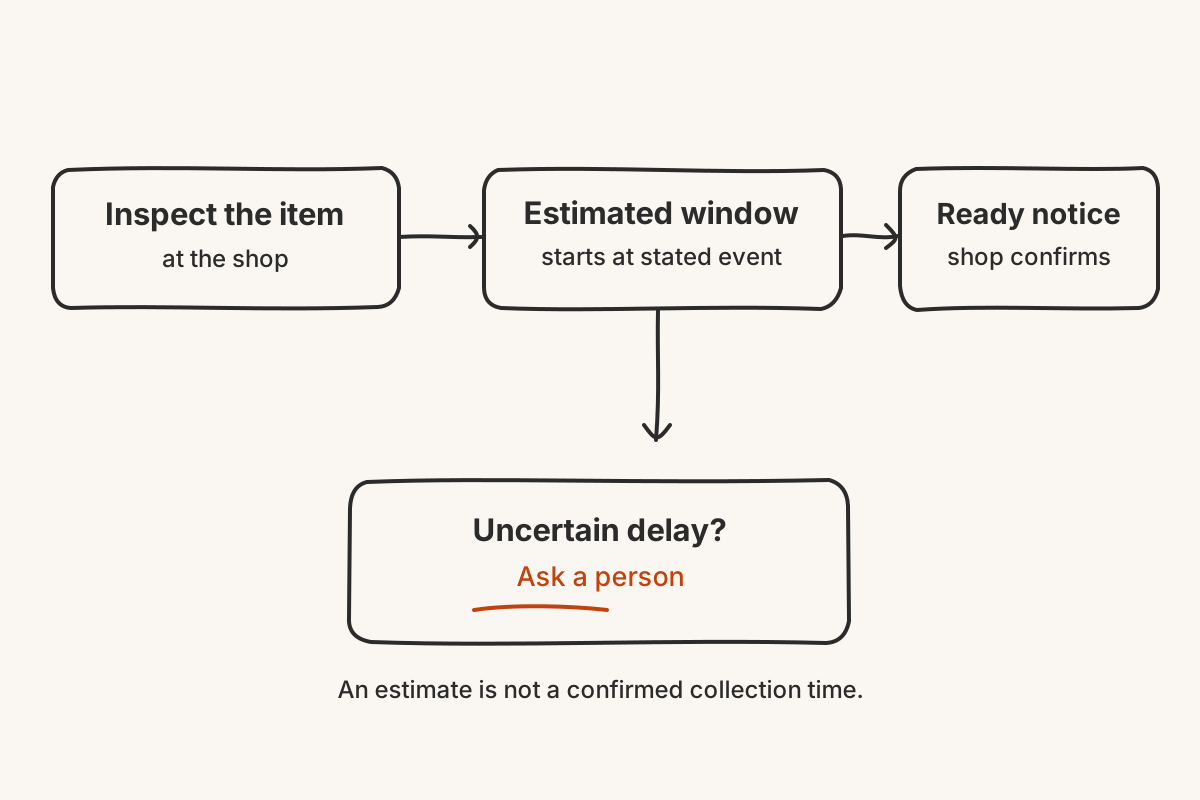
The useful sequence is: Inspect the item at the shop; give an Estimated window that starts at the stated event; send a Ready notice only when the shop confirms. Uncertain delay? Ask a person. An estimate is not a confirmed collection time.
A standard job may fit the published range, but a shoe left at the bench still has its own history. Perhaps a sole is available, but the stitching needs review. Perhaps the customer has requested a different finish. A website cannot see which stage that pair reached. The estimate teaches customers when to expect an update; the pickup policy explains collection after readiness is confirmed. Neither page is a live repair tracker.
What can Chatterbox answer from the published rule?
Chatterbox's answer can point to a source passage from a business page, uploaded file, pasted text or hand-typed Q&A. That is useful for the question “When does your standard sole-replacement estimate begin?” The source must actually name the event and scope. A question about one customer's shoes is different: no static range proves where that pair sits on the bench.
If the supplied material cannot settle it, Chatterbox says it cannot find the answer and requests a name, phone number and email. That lead reaches the dashboard and by email. The shop can use the contact to look up the job and decide what to say; the widget neither phones the customer nor confirms a deadline.
Try a three-question rehearsal. First ask about the normal starting event. Next say the shoes need an unusual material. Finally ask if the pair dropped off yesterday can be collected on Friday. Read the cited passage with the first reply: did its range and condition survive intact? The other two should not turn a general window into a guarantee. If a new delay pattern keeps appearing, have the workshop decide whether to add a scoped note to its public wording. Change the maintained source rather than leaving an older estimate in a leaflet. A website source can be re-crawled once a day. Clear repair copy tells people when a clock starts, not just how long it might run.