A repair shop intake checklist should record the device, reported fault, accessories left behind, visible condition, and a way to contact the owner. Keep the inspection charge and permission to begin repair separate. Publish the general drop-off instructions; have a person confirm the details of an individual device at the counter.
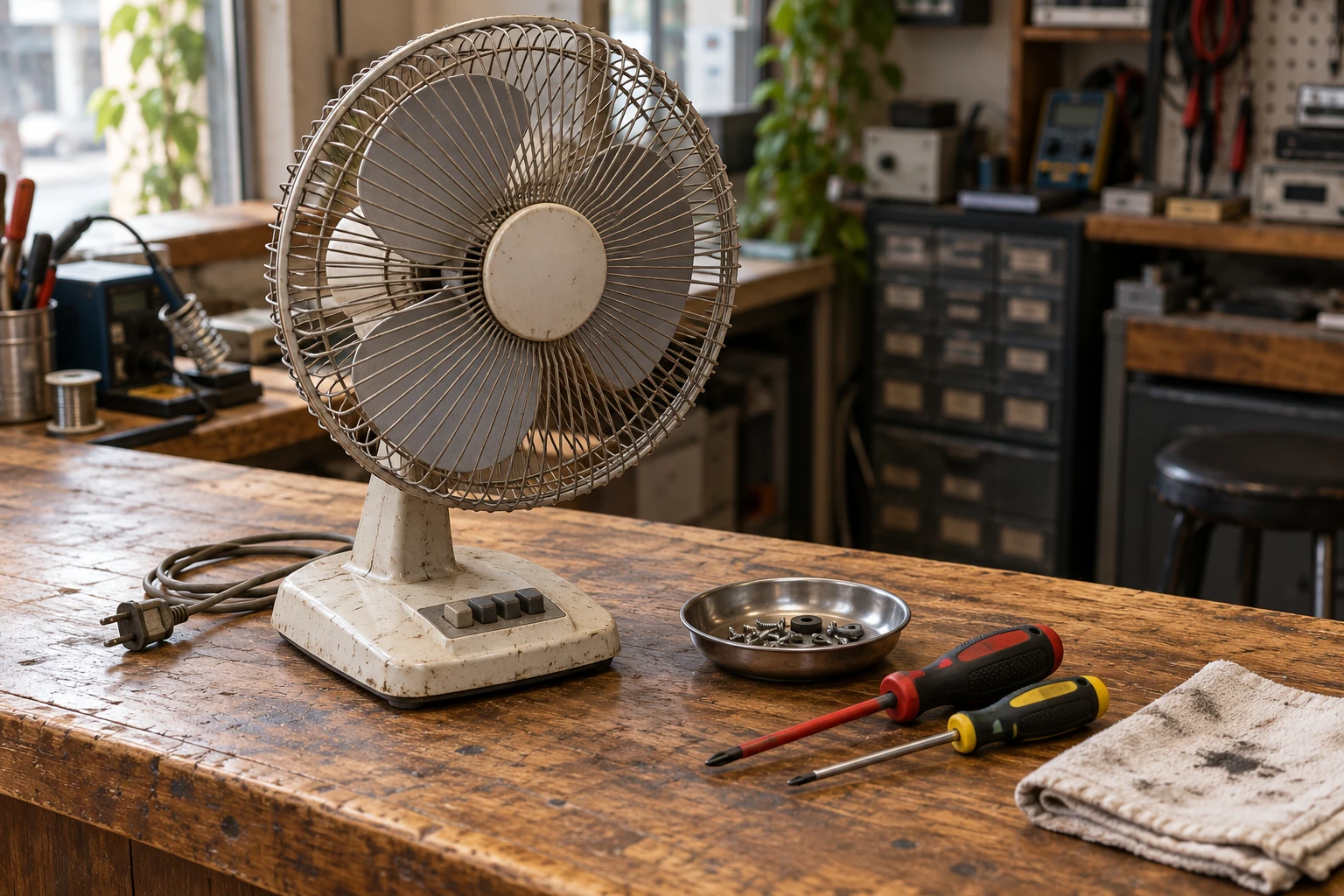
A customer leaves a fan at a repair counter. Later, the shop remembers a noise; the customer remembers a complete failure to start. Both may be describing the same fault, but the handover has no record. A device intake checklist gives the shop and customer one agreed starting point. It is not an estimate, a diagnosis, or consent to do the repair.
Use the following fields as a writing aid. Decide what your shop really records, how it keeps the record, and what it gives the customer. Delete fields that do not apply. Do not ask people to put private device information in a public website chat.
What should be recorded when a device is dropped off?
Identify the item without assuming the fault. Record device type, make and model if visible, and a reference your shop assigns. Ask the customer to describe the symptom in their own words: “fan hums but blades do not turn” is more useful than “broken.” If the fault appears only after warming up or when using a particular setting, add that detail. Mark it as reported by the customer, not as something the shop has verified.
List what arrives with the device. A charger, remote, detachable cable, battery, or case can go missing in an ambiguous handover. Record accessories individually, and distinguish “customer did not bring it” from “shop declined to accept it.” Note obvious external condition in neutral language: a cracked guard, missing screw, or loose switch. Do not call hidden damage from a visual check.
Agree on the contact route and who may approve the next step. Keep phone and email on the shop's private intake record, not in a public FAQ. A staff member should check the device and accessory list with the customer before handing over a reference or receipt. If the customer disputes a condition note, settle the wording while both can still see the item.
What wording can a shop use on the intake record?
Adapt this block to the shop's actual process. Brackets are decisions for the business, not ready-made promises.
Item received: [device type, visible make/model, shop reference].
Fault as reported by customer: [symptom, when it occurs, anything already tried]. This has not yet been verified by inspection.
Accessories received: [each item] / [none]. Visible condition at handover: [specific observation] / [no condition noted at the counter].
Next step: [explain how the shop inspects the item and how the customer receives the result]. The intake record is not a repair estimate or authorization to start chargeable repair work.
Contact and approval: [private contact route and person authorized to decide about a quote]. Customer copy: [how the customer receives the reference and agreed details].
Do not copy “no condition noted” if the counter did not check the outside of the item. “No visible damage found” is a stronger assertion and needs an actual inspection. Nor should “we will contact you” stand in for a method nobody at the shop monitors.
Which instructions belong on the website, and which stay at the counter?
Publish the general drop-off rule: which devices the shop accepts, where to bring them, which accessories are needed for assessment, whether an appointment is required, and what proof the customer receives. Write only the version your staff can follow. If different devices need different accessories, state the condition beside each instruction.
The website cannot say what this particular fan arrived with or whether its switch was already loose. That belongs in the individual intake record, completed with a person. The diagnostic fee FAQ covers what assessment costs and where permission for repair begins; the pickup FAQ covers collection later. Keep those policies distinct from the handover record so an acknowledgement of receipt is not mistaken for approval of a bill.
Chatterbox can answer questions about published drop-off instructions from the business's supplied material and show the source passage. If the material does not settle whether a specific device can be accepted or what condition it arrived in, it says it cannot find the answer and asks for name, phone, and email. The lead reaches the dashboard and by email for a person to respond. It cannot inspect a device or sign an intake record.
How do you check the handover before using this checklist?
Walk through one ordinary drop-off and one awkward one with the counter team. For the ordinary case, can the customer name the device, fault reported, accessories and shop reference from their copy? For the awkward case, suppose a cable is disputed or somebody other than the owner is leaving the item. Does a staff member know which details to verify before accepting it? Do not publish a blanket permission for another person's property because one handover went smoothly.
Test the website answer with “What should I bring when I drop off my fan?” and then “Did I leave the charger with my fan yesterday?” The first should point to a real published instruction if you have one. The second needs the individual record and a person, not a confident guess. A useful checklist reduces arguments at pickup by making the starting condition clear at drop-off.