A customer pickup policy FAQ should say when an item can be collected, where to go, what proof the collector needs, and what happens if someone else arrives. Publish only the rules your shop actually follows. Chatterbox can repeat those rules from your content, but a person should confirm whether one particular repair is ready.

The shoe repair is done, but the customer cannot get to the shop before closing. Can a friend collect it? A pickup FAQ can settle the ordinary rule before anyone travels. It cannot tell a customer that their particular pair is ready unless the shop has checked. Use the wording below as a framework, not as a policy to adopt unchanged.
What does a customer need to know before traveling?
Give collection its own section instead of burying it under delivery or opening hours. Start with the ready signal: how your shop tells a customer the work is complete, and whether an estimated completion date counts as permission to collect. If your process has no ready notification, say how the customer should check first. Do not write “collect after three days” merely because many jobs take that long.
Then name the collection location and the hours that apply there. The repair bench and the customer counter may be in different places; the workshop might close before the storefront does. Publish the address and collection window that a customer can actually use. If you require an order reference, receipt, or other proof, name what you accept without asking a visitor to put private details in a public chat.
Decide whether a friend or courier may collect. If yes, describe what authorization the customer must give, how the shop verifies it, and what the collector must present. If no, say so clearly. A sentence saying “someone can pick it up for you” is incomplete when the person at the counter has no way to verify who that someone is.
Which FAQ answers can you copy and adapt?
Replace each bracket with a rule your team has approved. Delete any question that does not fit your shop.
How will I know my item is ready? We will [describe the actual notification or check-in method]. A quoted completion date is [state whether it is only an estimate]. Please [state how to confirm] before traveling if you have not heard from us.
Where and when can I collect it? Collection is at [specific counter and address] during [collection hours]. [State any different holiday or weekend arrangement, if applicable].
What do I need to bring? Bring [the shop's accepted reference or proof]. If the original document is missing, [explain how the team handles that case instead of promising release].
Can someone else collect it? [State yes or no.] If yes, the customer must [explain the authorization step] and the collector must [explain the shop's verification step]. [State whether a courier follows the same rule or needs separate approval].
What if I collect later? [State the actual holding period, any charge, and how the customer will be told, if those rules exist.] If no holding rule has been approved, ask the team rather than inventing a deadline.
A sample FAQ is not evidence that your shop offers a service. In particular, do not copy the third-party pickup answer until staff have agreed how to recognize an authorized collector at the counter.
When does a collection question need a person?
The decision path is simple: Pickup request from customer. Ask whether the Published collection rule covers it? If Yes: follow the stated steps. If No: ask for contact details for shop review. A person confirms this item's status and collector before the shop makes a pickup promise.
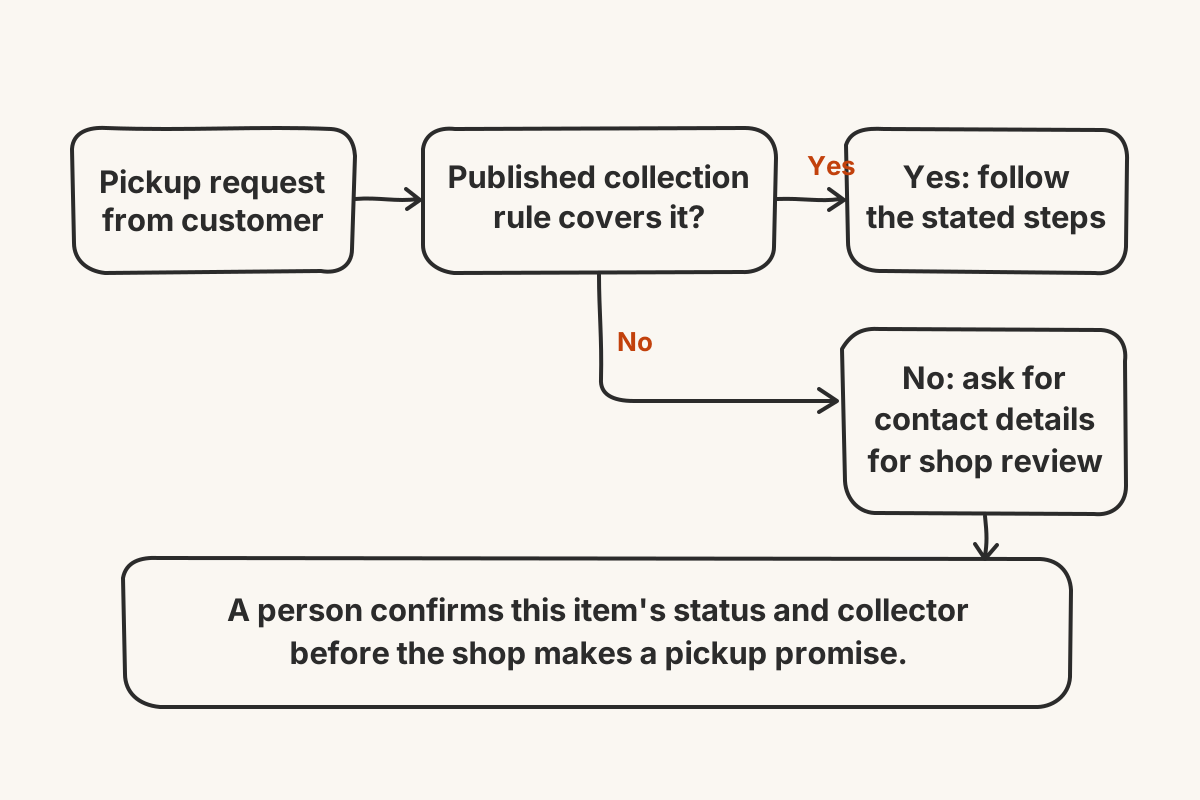
“Can my sister collect a repaired shoe with my receipt?” may fit a published authorization rule. “Has my left shoe been repaired?” is about a particular job, not a general policy. So is “Can I come after closing?” when no exception is published. A public FAQ cannot inspect the bench, verify a collector, or approve special access just because it explains ordinary collection.
Chatterbox answers from the business's own material and shows the source passage with its answer. If the material does not answer, it says it cannot find the answer and asks for name, phone, and email. That enquiry reaches the dashboard and by email. The shop team, not the widget, can then check the repair and decide what to tell the customer. The widget captures contact details; it does not call the customer or confirm collection on its own.
How do you check the FAQ before putting it online?
Ask a staff member to play three visitors: one collecting with the usual proof, one sending a friend, and one asking whether a specific job is ready. For the first two, the wording should name the actual counter procedure; if the friend case is not settled, remove its proposed permission. The last question should go to the team, not receive a made-up status.
Keep the policy in one maintained source. Chatterbox can use a site crawl, file upload, pasted text, or hand-typed Q&A. If you change collection hours or the authorization rule, revise the source the widget uses and retire the old version. A source can be re-crawled once a day. Recheck all three visitor questions after the change, especially the one that still needs a person.