A repair estimate approval message should identify the item, quote the proposed work and price, say what is not yet authorized, and give the customer a clear way to accept or decline. If inspection changes the scope, send a revised quote for fresh approval before proceeding. Use the template below with your shop's actual terms.
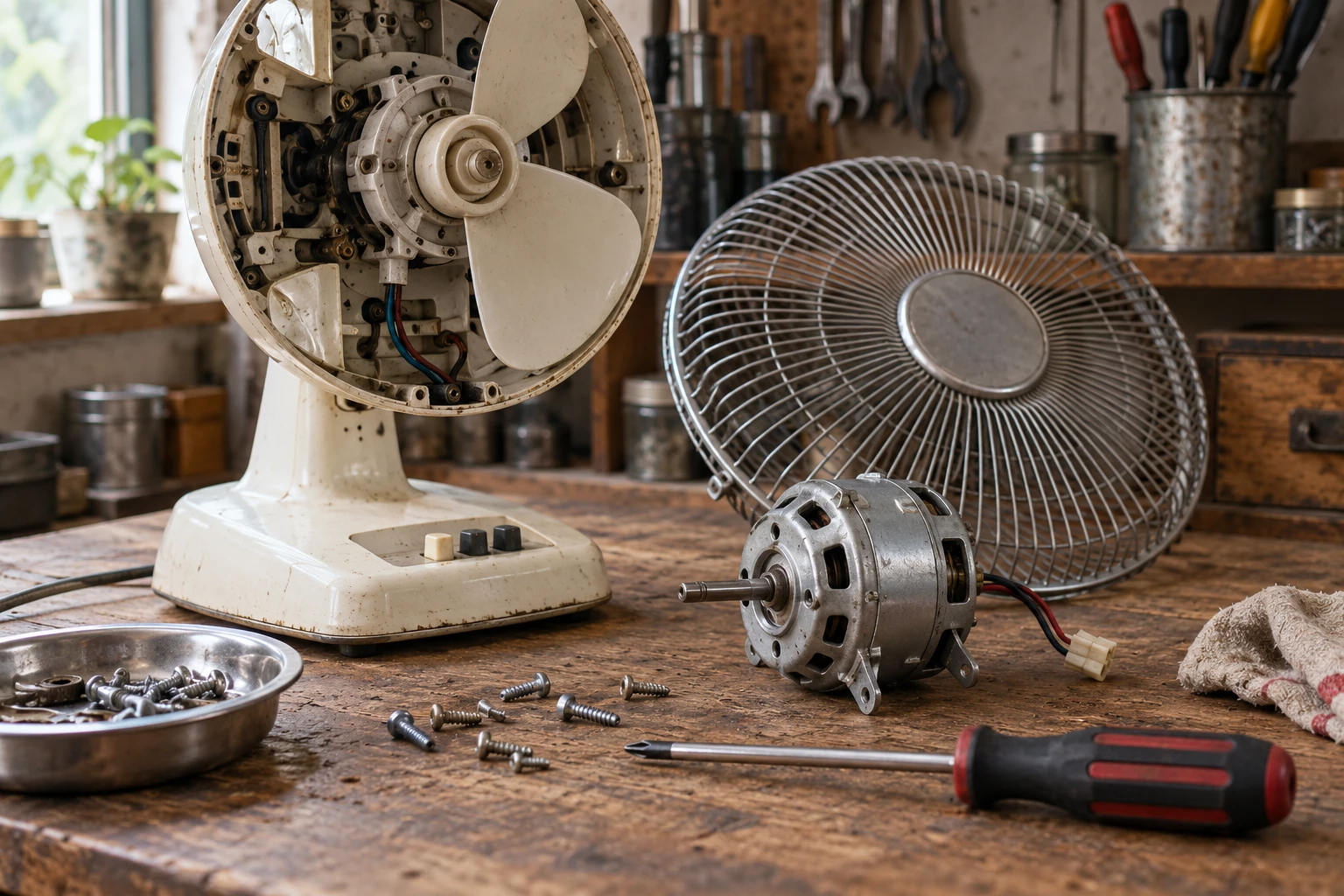
A fan waiting on the bench still needs its owner's permission before repair. Send a defined job, price, and way to refuse. This message is the decision between diagnosis and work, not the drop-off receipt. The intake checklist records what arrived; the assessment-charge FAQ covers the cost of examining it. Neither authorizes a part replacement.
What should the customer be agreeing to?
Picture a bench holding two identical fans. One has a seized shaft; the other has a damaged switch. An approval reading “fix my fan” cannot distinguish them. Pair the customer's intake reference with the estimate's revision date, and file the customer's response under both. When a new estimate supersedes an old one, the counter should be able to tell which version was accepted without reconstructing a phone conversation.
Translate the technician's proposed operation into a recognizable description. Does the job replace the switch, clean the contacts, reassemble the guard, or merely test the unit? Those are different instructions. Set beside the operation a breakdown the customer can inspect: part, labor, the assessment already performed, and any applicable tax or collection cost. Specify which pieces are inside the stated total and which are separate under the workshop's terms.
Note what happens if the suggested component is unavailable. A substitute of another specification is a new choice, not a silent edit to the approved work. Testing may also uncover a second fault. The customer's current reply should cover only the repair described, even when the technician expects more work to be likely.
Copy this repair estimate approval message
Fill the blanks with the workshop's own finding and approved terms. The wording asks for a bounded instruction, not a general permission to fix whatever turns up.
Your repair estimate: [job reference and item]. Our inspection found [observed fault]. We propose [the specific repair and any named part].
Cost: [total and currency]. This amount covers [labor, part, inspection charge if applicable]. [Explain any other charge or calculation that applies to this job].
Please choose one: “I approve [reference and estimate version] for [described work] at [total]” or “I decline [reference and estimate version].” Reply through [the channel your shop monitors].
We start this work after [the shop's real confirmation step]. If you decline, [explain the actual collection arrangement and any amount still due]. If we find work beyond this estimate, we will ask you to decide on a revised proposal first.
Before sending, check the figure against the bench notes and ask whether the customer could identify the item from the message alone. A bracket left in place, an unspecified tax, or an old price copied into a new message means the draft is not ready to send. Decide who is allowed to approve on behalf of the owner according to your shop's own process; the sample cannot grant that authority.
Give the counter a way to reconcile the reply with the physical item: record the timestamp of the response, the estimate version, the approver, and the exact work approved on the job sheet. If the reply is a voice call, have a staff member document what was agreed using the shop's established consent process; do not pretend the web FAQ itself is a signed approval. Before the technician resumes, compare the record with the newest estimate and the item tag. A mismatched reference is a reason to pause, not to choose whichever answer seems favorable. This check is especially important when the same customer brings more than one appliance.
When does the first yes stop counting?
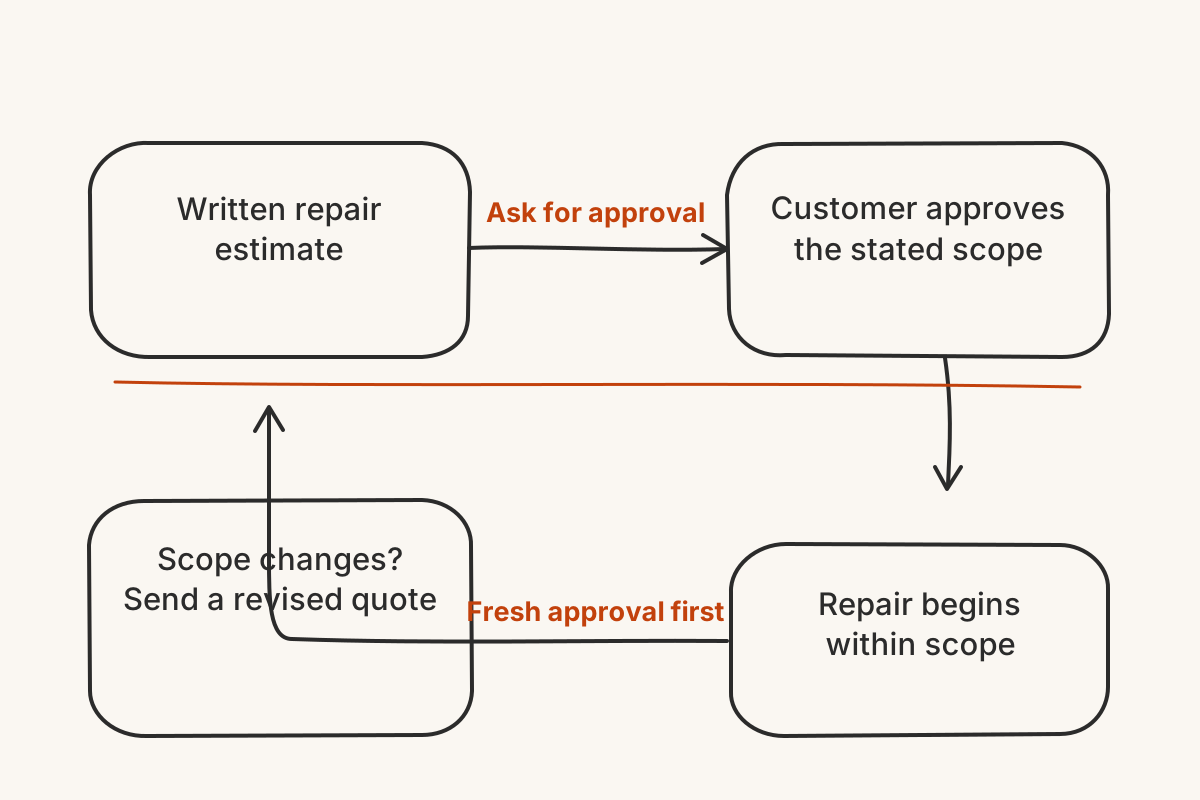
Use this path for the team: Written repair estimate → Customer approves the stated scope → Repair begins within scope. If inspection reveals additional damage, Scope changes? Send a revised quote and get Fresh approval first. The shop must not silently treat the first yes as approval for the extra part.
A superseding estimate needs its own identity. Put “revision 2” beside the job number, list the changed component, and show the difference between the previous and current totals. Is the technician pausing an unfinished repair, or proposing an additional task after completing the agreed portion? Those facts affect the customer's decision; a bare new number obscures them. Ask the customer to name the latest revision in the reply, then keep that reply attached to the matching workshop record. If they decline, the bench worker must decide how to leave the appliance safely and tell the counter what can be collected. An automatic promise to finish the earlier work may be impossible after the new fault is discovered.
Can a visitor approve a particular repair through website chat?
“Where do I send my approval?” is a process question. “Did the workshop receive my approval for job 417?” is a private-record question. Make the first answer public: name the monitored reply channel, the identifier to include, and the route for challenging a component on the proposal. Leave the second to the counter worker who can inspect the job sheet.
Chatterbox can surface the published procedure and its source passage from material the business supplies. It cannot inspect the bench log or sign on an owner's behalf. When supplied content cannot settle an enquiry, it says it cannot find the answer, asks for name, phone, and email, and sends the lead to the dashboard and by email. The team can compare the customer's message against the numbered estimate and respond after checking the record.