A quotation validity notice should name the quote's expiry date, what work and materials it covers, and what happens when a customer accepts after that date. Publish the general rule, but let a person check an individual expired quote. Chatterbox can repeat the written rule without promising that an old price still stands.

A customer opens a print-shop quotation after leaving it in their inbox for several weeks. The paper stock has changed, but the old total is still in the message. Before they approve the job, they need to know whether that total still applies. A website can explain the general rule. It cannot settle the condition of an individual quote without someone checking it.
Use the blocks below as prompts, not as terms you can paste unchanged. Decide the period, scope, and next step with the people who price the work. If a quote creates contractual obligations where you trade, have the wording reviewed for those rules too.
What belongs beside the date on a quotation?
A date alone tells the customer when to ask again, but not what they can rely on until then. Put the date beside the specific work, quantities, materials, and delivery assumptions used to calculate the amount. In a print shop, a run of standard cards on a named paper stock is not automatically a run on textured stock with a different finish. The acceptance method also needs a home: whom should the customer contact, and what counts as approval under your own process?
Suggested quote line: This quotation covers [specific work, quantity and materials] at [the amount your business approved]. It is open for acceptance until [calendar date and time, if relevant]. To accept, [your approved process]. If the specification or quantity changes, ask us for a revised quotation before approving the work.
Do not copy the bracketed language into a live site. A date format such as “valid for 30 days” is ambiguous once someone forwards a quotation without its original timestamp; use an actual date on each individual quote. The duration is a business decision, not a universal default. If tax or delivery is excluded, name that in the approved quote rather than leaving a customer to infer it from a total.
What should the website say about an expired quote?
The policy page can say what the team does next. It should not say that every expired quote is invalid, automatically renewed, or guaranteed at the former price unless that is the rule the business has actually approved. An expired estimate might still be workable, or a supplier's change might require a new amount. Someone needs to inspect the job before either conclusion is promised.
Suggested website FAQ: “Can I accept an older quotation?” If its stated acceptance date has passed, send us [the quote reference or other safe identifier] through [your contact route]. We will check the scope and current costs and tell you whether we can honor it or need to prepare a new quotation. Please wait for our confirmation before treating the old amount as accepted.
This wording gives the visitor an action without pretending that the website can inspect a supplier price or a private customer record. If your business has a different rule, replace it with that rule. Do not publish a generic exception just to make the FAQ sound accommodating.
Which change calls for a fresh decision before expiry?
A quote may be within its date and still describe a different job. Give the customer concrete examples that fit your trade. At a print shop, changing the paper, run size, finish, artwork dimensions, or delivery location can change the original calculation. A repair workshop might instead need to check a new fault or replacement part. The aim is not to list every possible variation. It is to make clear that “within date” and “same scope” are separate questions.
Suggested change line: This quotation applies to [the described job]. For a different [material, quantity or specification], contact us for a revised quotation before confirming the order.
Keep the original quote and the revision distinguishable in your own records. A visitor who brings the old version to the counter needs to know which document the team is discussing. Avoid posting customer-specific amounts on a public FAQ merely to make a chatbot answer more questions.
Where does Chatterbox stop and a person take over?
Chatterbox can read the general validity policy from a crawled website page, uploaded file, pasted text, or hand-typed Q&A. Its answer shows the source passage. If the visitor asks, “Does my particular expired quote still stand?”, the published policy does not supply that answer. Chatterbox says it cannot find it and asks for name, phone and email; the lead goes to the dashboard and by email. A person can then inspect the quote rather than have the widget guess from a policy that never saw the job.
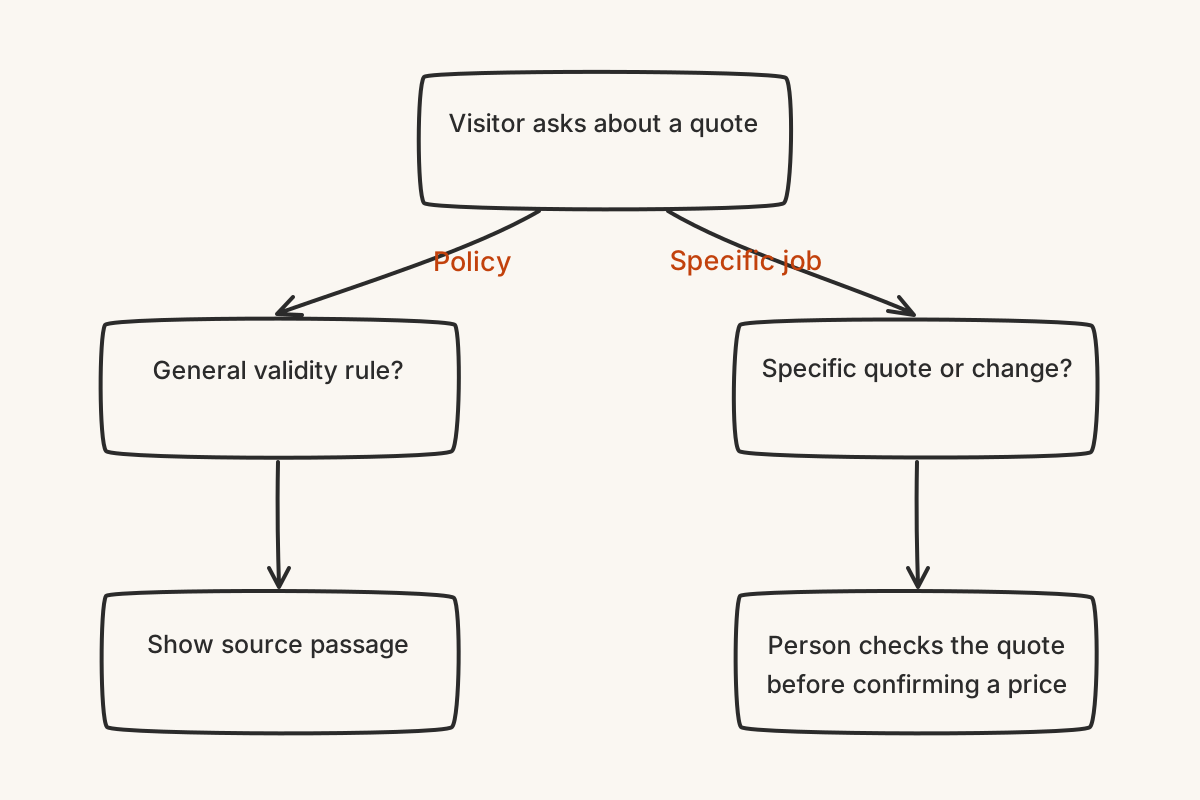
Test the distinction with one question about the general expiry rule, then another about an old quote with a changed specification. Check the first answer's passage for the date and conditions you intended. The second should not turn the general rule into an individual price approval. When the policy changes, update the maintained source and retire old copies before refreshing the website source; Chatterbox allows one re-crawl per source each day. The useful result is a clear next step, not an invented commitment.