Chatterbox can answer advance payment and deposit questions from terms your business has published. It can repeat the stated amount, due date, purpose, and refund rule. When the material does not settle a particular order or exception, it asks for contact details instead of inventing a payment commitment.

A customer has agreed to the work, but the order is not settled. They still want to know how much to pay now, what that money reserves, and whether it comes back if plans change. Chatterbox can point them to the terms the business has written. It should not decide a disputed deposit from a generic sentence.
Which promise does the advance actually make?
“Pay an advance to confirm” leaves several commercial decisions hidden. Before a chatbot can explain the arrangement, the business needs to finish the sentence.
Name the payment. An advance may form part of the final price. A booking amount may reserve a date. A security deposit may be held against damage. Businesses sometimes use those words interchangeably even when their staff treat the money differently. Use the term that appears on the customer's quote and define its job.
Add the figure or formula. A fixed sum, a percentage, and an amount that varies by service are not equivalent. If custom furniture needs one percentage while repair work needs another, attach each figure to the work it covers.
Write down the trigger and the consequence. Is the money due after a quotation is approved? Does the workshop buy material only after it arrives? Is the date held for a limited period? The visitor needs to understand what paying changes.
Then cover cancellation separately. State any deadline, deduction, adjustment against a later bill, or transfer to another date only when the business has approved that term. “Non-refundable deposit” may be concise, but it still needs a scope: which booking, from what point, and under whose cancellation.
Can the visitor settle the question from published terms?
Chatterbox can answer from a site crawl, uploaded file, pasted text, or hand-typed Q&A. The source might be a service page for a standard order or an approved booking policy supplied through the dashboard. Its value is not merely that a number appears. The amount, timing, and condition can be shown together through the source passage behind the reply.
Consider a visitor asking, “How much do I pay to start?” If the relevant service page says the advance is a stated percentage after quote approval, that is a complete public answer. A second visitor asking, “Will you return the amount if I postpone?” has a complete answer only if the postponement term is also written there.
Being available outside business hours does not widen the rule. The widget can explain what the business has committed to in its material. It cannot inspect a bank transfer, read an individual quotation, or establish which person canceled an order.
This is why an advance policy needs one clear home. A current service page beside an older uploaded rate card gives the customer two versions without telling Chatterbox which one the team still honors.
Which cases should stay undecided online?
A specific transaction should go to a person when the result depends on records or judgment. Common examples include a changed scope, a payment below the requested amount, work already started, a missed cancellation date, or a different term written into the customer's quotation.
When the supplied material does not settle that case, Chatterbox says it cannot find the answer. It asks for the visitor's name, phone, and email; the lead reaches the dashboard and by email. That preserves the question without confirming receipt, approving a refund, or placing a call.
A cautious-sounding guess is still expensive here. “It should be adjustable” may be heard as permission to proceed. By the time a person checks the order, the customer believes the business has already decided.
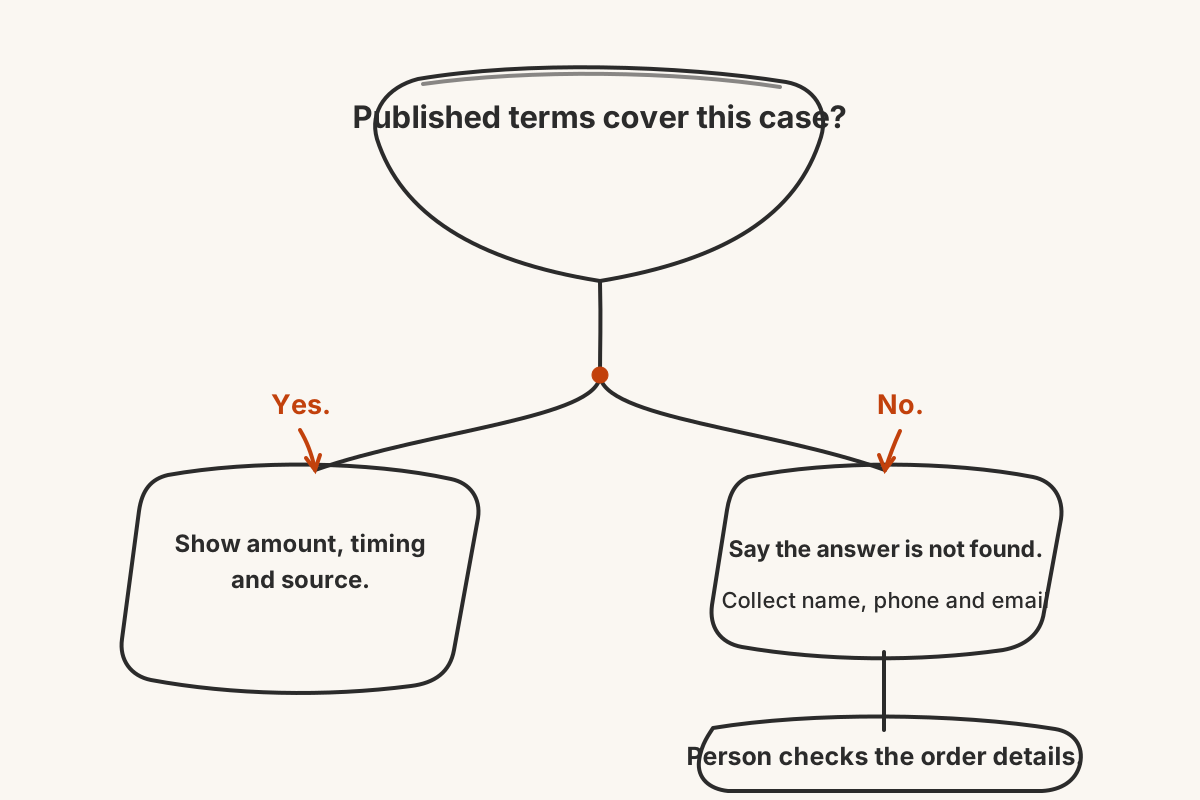
The diagram keeps that boundary visible. Begin with Published terms cover this case? Yes. Show amount, timing and source. No. Say the answer is not found. Then Collect name, phone and email so a Person checks the order details.
What should you test before relying on the answer?
Write four questions from the terms rather than asking the chatbot to “explain the deposit.” Ask for the amount, the due point, what payment confirms, and what the cancellation clause says. For each reply, follow the displayed passage and read the condition around it. A percentage quoted without the service it applies to has lost the important part.
Now use the facts of a real exception but no customer data. Move the cancellation beyond the written deadline, change the service after confirmation, or ask about a partial payment the policy never mentions. The result should be an honest gap and contact capture, not the nearest standard term.
After any change, correct the source the team owns and remove the superseded copy. A website source can be re-crawled in Chatterbox once a day. Re-run the four policy questions and the exception after refreshing it.
The aim is modest: let a visitor understand the standard advance before paying, while keeping the unusual order open for someone who can see what actually happened.