To trace a wrong chatbot answer, preserve the visitor's question, reply, and displayed source passage as one incident. Decide whether the source is stale, irrelevant, incomplete, or stretched beyond what it says. Repair that cause, then replay the question and a boundary case the chatbot should refuse.

A customer reports that the website chatbot quoted an old cancellation period. Treat that report like a small content incident, not a prompt-writing problem. Chatterbox shows the source passage with each answer. That evidence lets you investigate what the business supplied instead of guessing why a reply appeared.
What evidence should you keep from a wrong chatbot answer?
Save three things together: the visitor's exact question, the complete reply, and the displayed source passage. A screenshot is useful, but copy the words too. Searchable text helps you locate repeated figures or policy phrases later.
Do not tidy the visitor's wording. “Can I cancel after delivery?” may retrieve different material from “What is your cancellation policy?” The difference is part of the report.
Write the approved answer beside the evidence only when someone responsible for the rule can confirm it. If the team cannot agree on the current answer, the chatbot has exposed an unresolved business decision. There is nothing reliable to repair against yet.
Which kind of answer failure are you investigating?
The displayed passage is outdated. The chatbot may have represented an old page accurately. The content is wrong even if the summary is faithful.
The displayed passage is about something else. A page can share words with the question without settling it. This is a retrieval mismatch. Read the passage as a customer would: does it actually contain the disputed answer?
The passage contains a condition the reply omitted. A seven-day period may apply only to unopened items. The source is real, but the shortened answer changes its meaning.
The reply extends beyond the passage. A page listing ordinary weekday hours does not establish a public-holiday opening time. The correct behavior at that boundary is a refusal, not a likely schedule.
This classification prevents the easy but ineffective fix of adding another version of the answer. More copies can make the evidence harder to untangle.
How do you find every copy of the disputed fact?
Search for a distinctive fragment: the old amount, deadline, location, or condition. Chatterbox can use four kinds of business material—a site crawl, file upload, pasted text, and hand-typed question-and-answer pairs—so check each kind that the account uses.
A corrected webpage does not erase an old uploaded rate card. A new manual answer does not remove conflicting wording from the site. Build a short source list and mark which item the business intends to own. The result should be one approved home for the fact, with duplicates removed or brought into agreement.
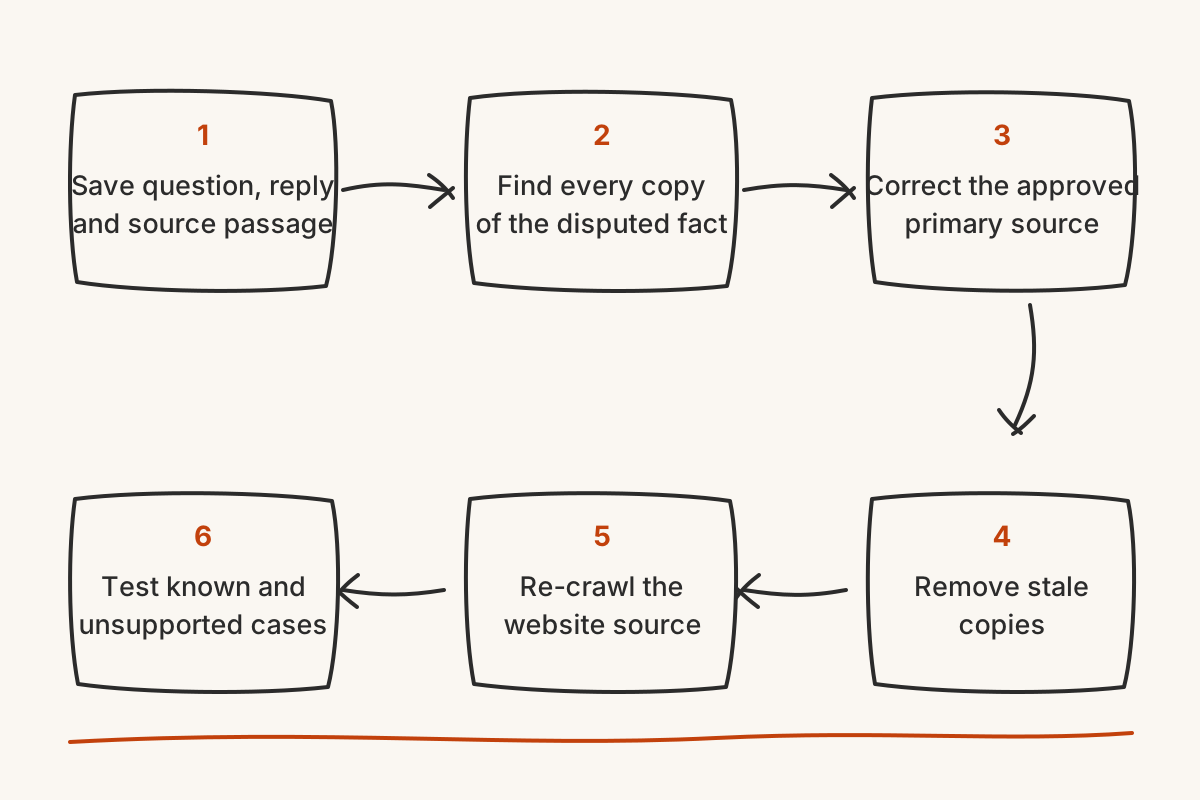
The figure condenses the investigation into six labels: Save question, reply and source passage. Find every copy of the disputed fact. Correct the approved primary source. Remove stale copies. Re-crawl the website source. Test known and unsupported cases.
What repair matches the failure you found?
For stale material, correct the approved source and retire the old copy. For an irrelevant passage, remove misleading duplication or rewrite the page so its scope is unmistakable. For an omitted condition, put the rule and its condition in one complete statement. For an unsupported extension, do not manufacture a standard answer merely to stop the refusal.
When the repair changes a public page, confirm the corrected words are visible at the live URL. Then re-crawl that website source. Chatterbox permits a source to be re-crawled once a day, so gather connected fixes before spending the refresh.
What tests prove the wrong answer is closed?
Replay the exact reported question first. Confirm both the reply and its displayed source passage. A correct sentence attached to an old passage is not a clean result.
Next, paraphrase the known case. Then change one condition so the approved material no longer settles the answer. Chatterbox should say it cannot find the answer and ask for contact details rather than expanding the repaired rule. Lead capture collects name, phone, and email; the lead reaches the dashboard and by email for a person to handle.
Close the incident with a five-line note: reported question, failure type, source changed, refresh date, and test results. The point is not to make one awkward transcript disappear. It is to leave a fact with one owner, a visible source, and a clear edge where the chatbot stops.