A tailor alteration fitting FAQ should explain whether a fitting is needed, what garment and shoes to bring, when the tailor can quote, and when sewing begins. Publish the normal process, but leave the fit and feasibility of a particular garment to the person examining it. Adapt the sample answers to your shop's real practice.
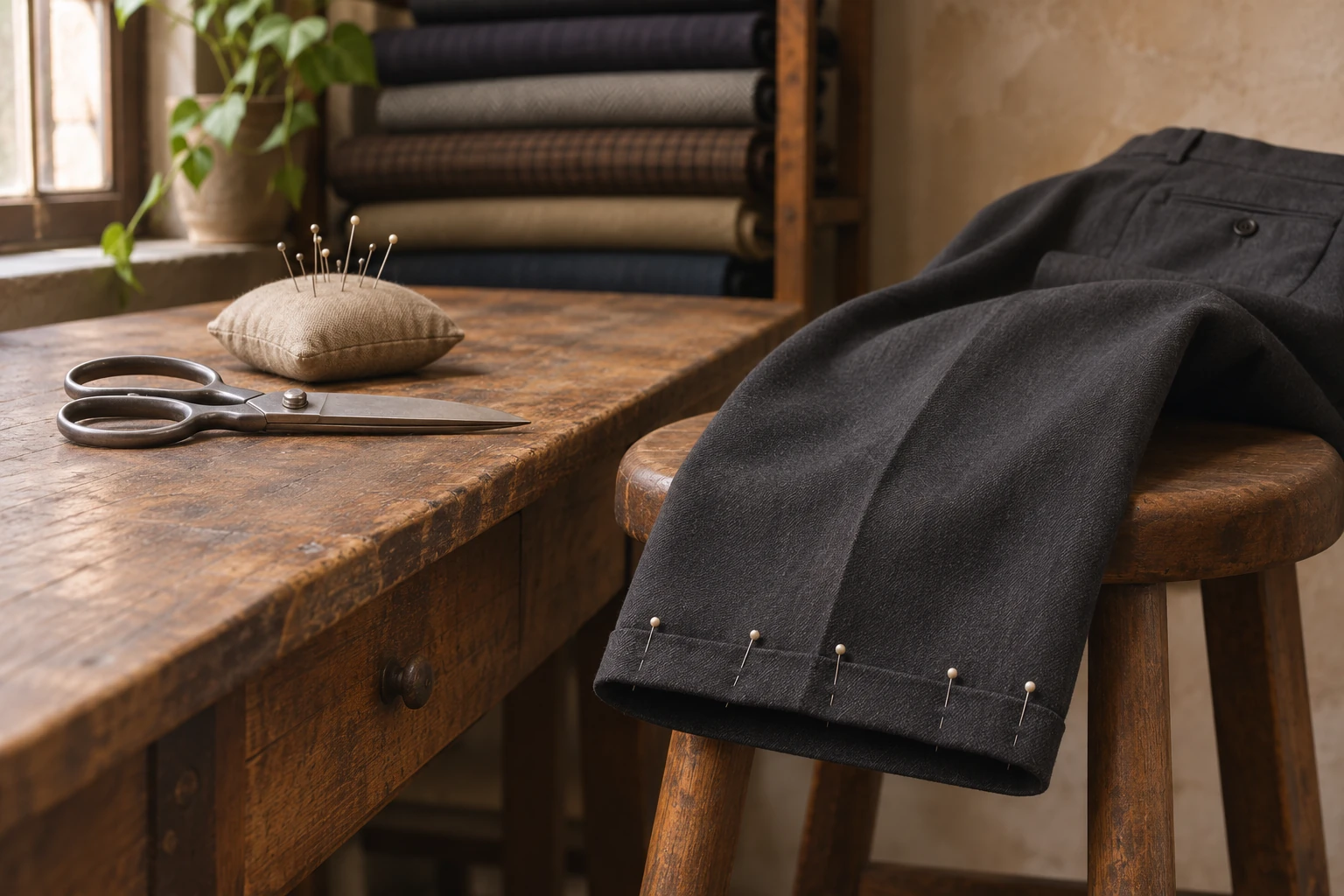
A customer wants their trousers shortened before a family event. They send a photograph and ask for the price and the day they can collect them. The photograph shows the trousers, but not where the hem should sit with the shoes they plan to wear. An alteration fitting FAQ can explain what happens next without treating a photograph as a finished measurement or an enquiry as approval to cut fabric.
This is for alterations to an existing garment. It is not a custom-order FAQ about making a new piece, or a general appointment reminder. The distinction matters when a customer thinks a quick message has already established the work.
What should a customer bring to an alteration fitting?
Start with the garment itself and the use that determines the fit. For trouser length, the shoes a customer intends to wear can change where the hem falls. For a jacket, ask whether the customer needs to wear a particular layer beneath it. These are prompts for a tailor to decide, not universal requirements for every alteration. If your shop does not ask for shoes, do not print that instruction just because it sounds professional.
State whether the wearer needs to attend. Some work can be assessed from an existing garment and a clearly agreed instruction; other work needs the person there so the tailor can pin it on the body. Have the shop distinguish those cases before publishing an answer. Do not promise that measurements taken elsewhere will produce the same result on a garment the tailor has not seen.
If the item has already been altered, tell the customer to mention it. Seams, remaining fabric, lining and previous work may affect what can be changed. The FAQ should invite an assessment, not declare every alteration possible.
What can the shop say before it has seen the garment?
Use this block as a starting point. Every bracket needs a real decision by the shop before publication; remove any question your staff cannot answer consistently.
Do I need a fitting? [Name the alteration types you assess in person and any cases you handle without the wearer present.] For a fitting, bring [the garment and any specific shoes or layers your tailor actually requires].
Can you quote from a photograph? [State whether photographs help with an initial enquiry.] The final scope and price are confirmed [at the point your shop actually checks the garment]. A photograph alone does not show every seam or how the fabric sits on the wearer.
When will you begin sewing? [Describe the shop's actual confirmation step.] We will explain the proposed alteration, price and collection estimate before [the point at which your shop starts work].
What if the requested fit is not possible? [Explain how a tailor will discuss another option or decline the job.] We cannot confirm a particular result before examining the garment.
Notice what this wording does not supply: an invented starting charge, a standard completion date, or a guarantee that every hem can be let out. A shop may publish those facts if it has approved terms that define the garment and conditions. The template cannot choose them. Ask the person at the fitting to record where the pins sit and which change the customer actually approved, rather than relying on “make it shorter.”
When does a fitting become permission to alter?
The working route is Fitting and pinning → Written scope and quote → Customer approval → Alteration begins. If the garment raises an Uncertain fit? Ask the tailor question, return to the fitting before treating any scope as settled. Pins show a proposed line; they do not, by themselves, say which seam will be opened or what the customer agreed to pay.
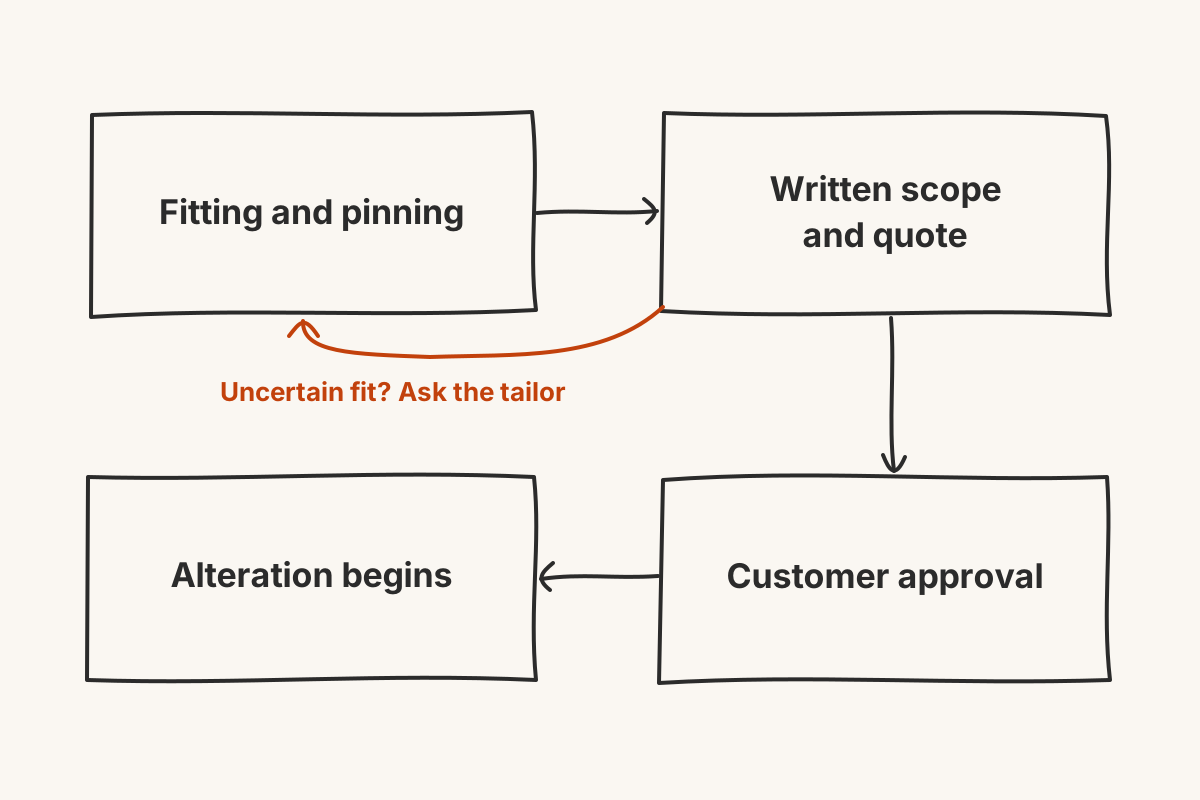
Keep the proposal tied to the garment: hem length pinned at the fitting, whether the original finish can be retained, the approved charge and how the customer learns the item is ready. If the tailor finds that the requested finish cannot be made after inspection, check with the customer before doing a different job. The pickup FAQ is useful for collection rules; it is not a record of the alteration agreed here.
Which questions should go back to the tailor?
A website can answer “Should I bring the shoes I will wear?” from the shop's published instructions. It cannot look at an individual trouser leg and promise that the hem can be lowered by a specified amount. Chatterbox answers from the business's supplied content and shows the source passage. When that material cannot settle a visitor's particular fit question, it says it cannot find the answer and asks for name, phone and email. The lead goes to the dashboard and by email for a person to handle. A tailor still has to examine the garment and decide what is possible.
Test the finished FAQ with two enquiries. One asks what to bring to an ordinary trouser fitting. The other says a previously shortened pair must be let down for a specific event. The first should find the approved preparation rule. The second needs the garment and a tailor's judgment, even if the customer has sent a photograph. That is the useful boundary for a shop website: prepare the visit, but do not promise the fit before someone sees it.