A florist's substitution FAQ should say which flowers might change, what may replace them, when the shop asks for permission, and how the customer hears about a change. A bouquet photograph is not a guarantee that every stem is available. Use the wording below only after your florist decides the actual rule and who checks each order.
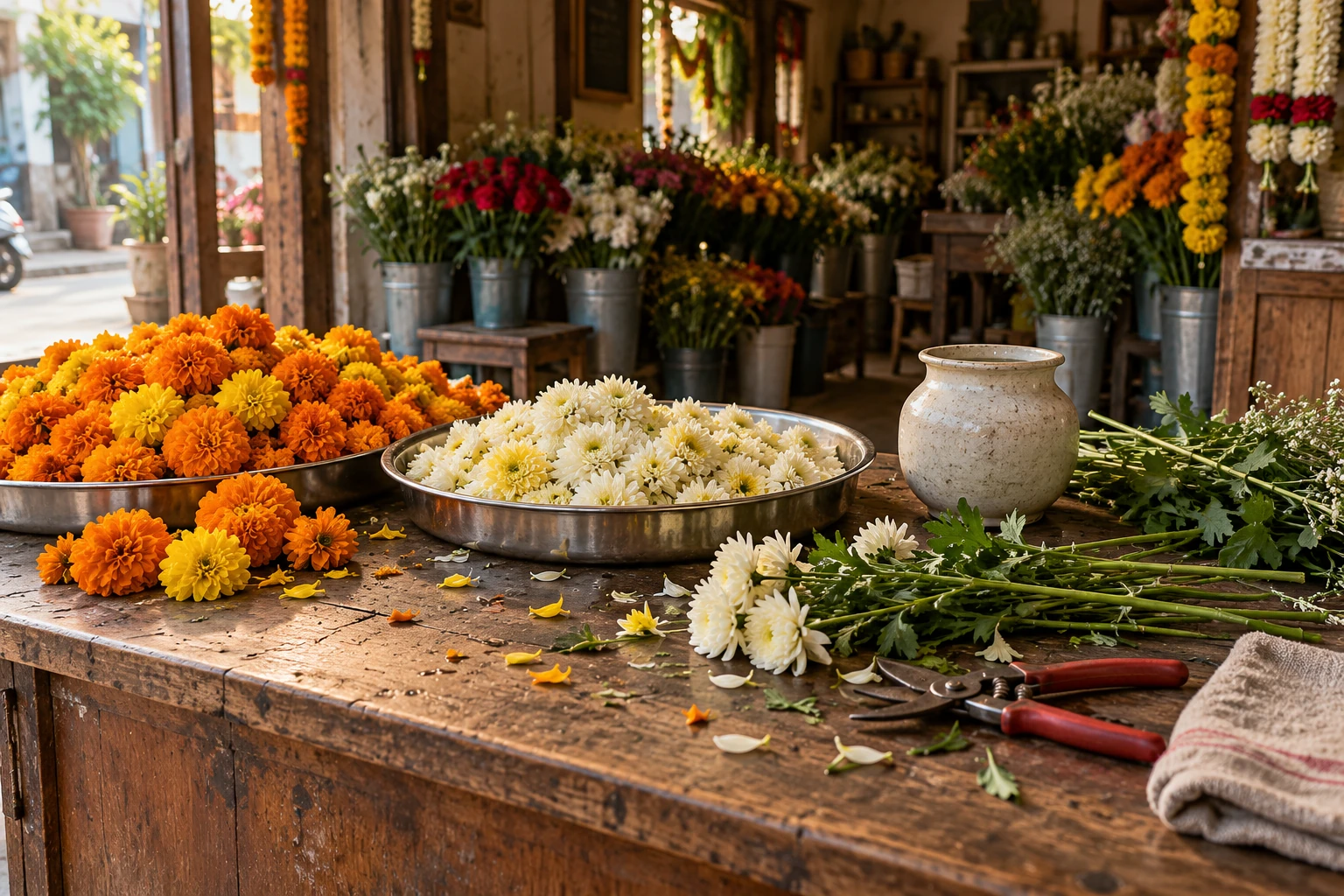
A customer chooses a bouquet pictured with white lilies for a family visit. At the counter, the lilies are gone. Can the florist use white chrysanthemums? That depends on the shop's actual promise and the customer's instructions. A short website FAQ can tell the customer what may change and when someone will ask them. It should not turn a photo into an unconditional promise of particular stems.
Which parts of the pictured bouquet can change?
List the elements your shop treats differently: named flower variety, color, size, greenery, container and overall style. Decide whether a listed arrangement is a fixed recipe, a sample style, or made from a seasonal selection. These are different offers. If the product name says “lilies,” a general warning about seasonal flowers may not fairly explain replacing the lilies. Ask the person who makes the bouquets which descriptions they can actually honor.
Check the product page alongside the policy. If it names an exact variety in one place but says “flowers may vary” elsewhere, a customer cannot tell which statement governs. Put the specific condition beside the specific arrangement. Do not solve a conflicting listing by hiding a broad permission in the footer. A buyer ordering for an occasion may care more about one named stem than the overall palette.
What substitution FAQ wording can a florist adapt?
The following is a drafting frame, not a ready-made policy. Replace each bracket with your shop's choice. Remove any option the florists cannot carry out.
Will my bouquet look exactly like the picture? [Say which pictured features are guaranteed and which are examples.] [Name any flower varieties, colors, containers or sizes that may change.] The shop will [say how it checks the actual stems for this order] before confirming it.
What happens if a listed flower is unavailable? We will [describe what alternatives the shop may consider]. For [name the changes that require approval], we will contact you at [the monitored route] before making the change. [Explain what happens if we cannot reach you in time.]
Can I request a flower that must not be replaced? Tell us [when and how to send a must-have or must-avoid request]. [Say who checks the request and how acceptance is confirmed.] A note attached to an order is a request until the team confirms it.
What if the proposed alternative does not suit me? [Set out the real options your shop offers before preparation or dispatch.] [Link to the shop's reviewed cancellation or refund terms where relevant.]
If a container is part of the sale, do not silently replace it under a rule about flowers. Likewise, “similar value” is not an explanation of how the arrangement will look. Choose wording the person arranging the stems can use when speaking to a customer, not a phrase that only sounds protective on a website.
When does a substitution need the customer's decision?
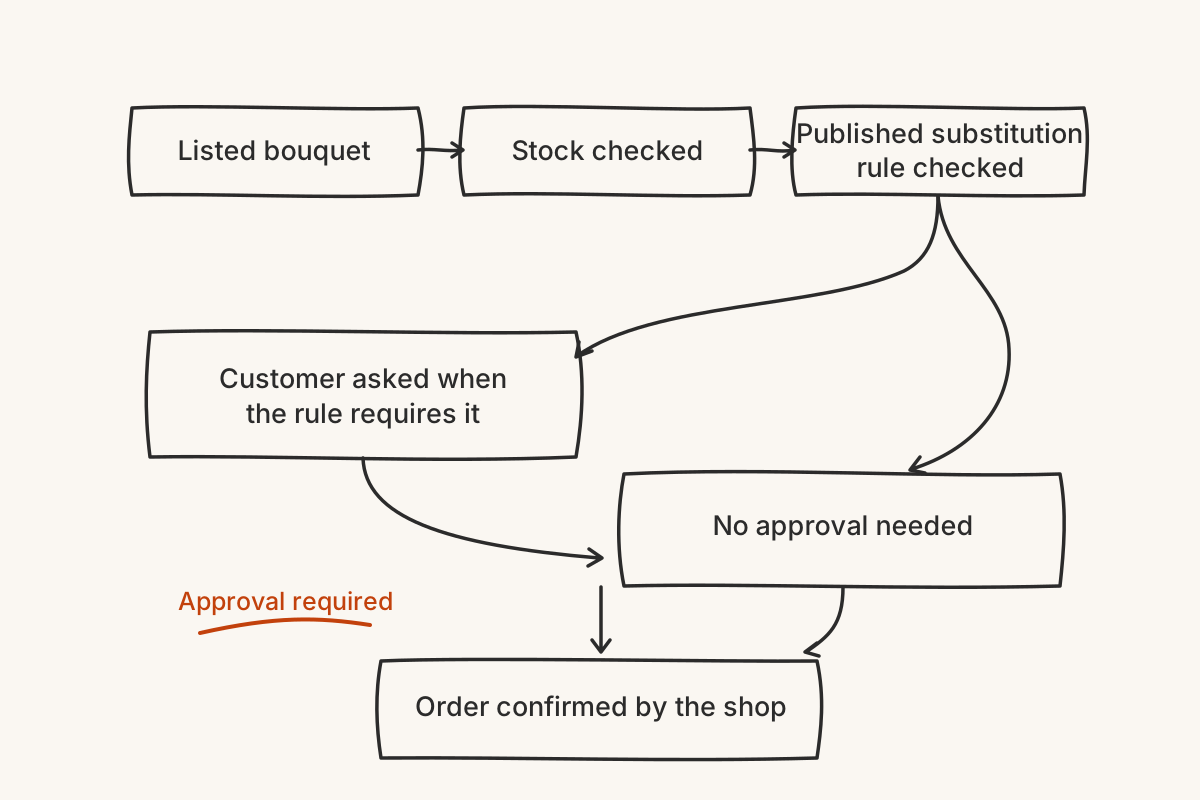
Think of the route as Listed bouquet → Stock checked → Published substitution rule checked → Customer asked when the rule requires it → Order confirmed by the shop. The stock check belongs to a person looking at the flowers for this order. The rule can be public; the availability and customer's preference can change from one order to the next. A request made before the florist checks stock is not a confirmed replacement. If the published rule says No approval needed for a permitted change, the shop still checks the stock and confirms the actual order; otherwise the customer is asked when the rule requires it.
Chatterbox answers from the business's supplied material and shows the source passage. If that material cannot settle whether today's lilies are available or whether a customer would accept chrysanthemums, it says it cannot find the answer and asks for name, phone and email. The lead arrives in the dashboard and by email for a person. The website widget does not check a live flower bucket, obtain consent, or confirm an order.
How can you test the wording before it goes live?
Give one colleague the product photograph and another the completed FAQ. Ask each whether the named white lilies are guaranteed. If their answers differ, fix the product listing or the FAQ. Then try an order with a must-have flower, a color request and a delivery date near closing. Can staff tell whether each instruction was accepted, merely received, or declined? Keep those states separate in the customer's reply.
Finally, ask what happens if nobody can reach the buyer. Do not write “we will contact you” without a decision about whether the shop waits, uses a permitted alternative, or cannot fulfill the request. Have the owner review any price, cancellation and refund consequences against the shop's actual terms before publishing. Once the policy changes, update the source material used by Chatterbox and test a routine substitution question alongside one about an unavailable named flower. The good outcome is not an answer to every question; it is a clear boundary between a published rule and a decision a florist must make.