A repair shop FAQ about customer-supplied parts should say whether the shop considers them, what information it needs before accepting one, who checks suitability, and which charges and responsibilities must be agreed before work starts. A part brought to the counter is not automatically approved for installation. Use the sample wording below only after your team sets its own policy.
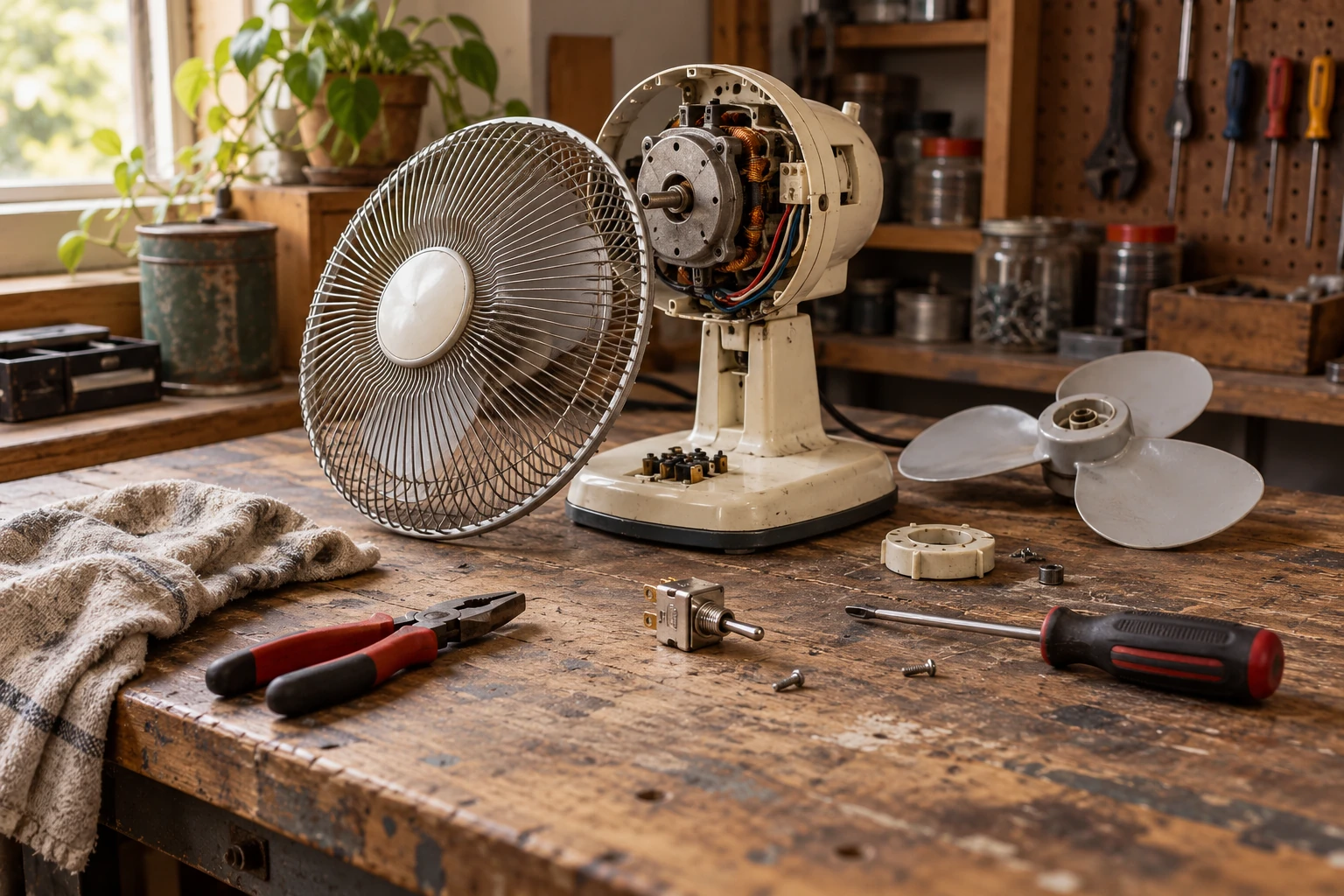
Someone buys a switch online and brings it with a broken fan. Their question is not just whether your workshop repairs fans. They want to know whether they can supply the component themselves. A useful public FAQ gives them a reason to call before making the trip, without pretending that a photograph of the switch proves it fits.
Do you allow customers to bring their own parts?
Choose one honest starting point: the workshop never fits outside components, it considers certain categories, or it will consider them after examining the item. Those choices are not interchangeable. “Bring it in and we'll see” may be reasonable, but it should tell the visitor whether a check has a fee and whether leaving the part at the counter means anything has been accepted.
Name the exclusions your staff can explain consistently. Perhaps a team handles fan switches but does not take sealed electrical assemblies. That is an example to discuss internally, not a safety standard or a policy to copy. The technicians should set their own list; the writer's job is to make it understandable. If the workshop does not know whether it can take a particular make, invite an enquiry instead of writing a universal yes.
Which details should the FAQ request before a visit?
Ask for the appliance's make and model, the symptom, the component's markings or reference, and whether it has been opened or fitted elsewhere. If your team needs something different, replace this list. The purpose is to avoid an unnecessary journey, not to conduct remote diagnosis. A seller's product listing may describe several compatible models while the component in the customer's hand differs. A counter inspection still matters.
Use this copy block as a frame. Each bracket needs a real local decision before it appears on the website.
Can I bring a component I bought elsewhere? [State the workshop's rule and any categories it excludes.] Please ask us about [the item and component details your team requires] before visiting. We cannot decide from a listing alone whether it is suitable for your appliance.
What happens when I bring it in? [Describe who looks at the appliance and part, and how you tell the customer whether the job can go ahead.] The workshop may decline to use a component that is unsuitable for the item.
Will there be a charge if it cannot be used? [Explain any inspection fee and how you disclose it.] [Explain what the customer can collect if the proposed job cannot proceed.]
What happens if it fails later? [Insert the workshop's approved terms about its labor and a component bought from someone else.] Ask us to explain the distinction before you agree to the job.
A vague “parts at owner's risk” line leaves too much unanswered. Who keeps a rejected component? Is its packaging returned? What does the inspection fee buy? What exactly is covered by the workshop's own workmanship terms? Have the owner review these questions and applicable obligations before printing the finished version. Do not invent an automatic waiver for someone else's purchase.
When does the workshop need the physical part?
An enquiry about the policy can be answered from approved general wording. A claim that this switch is suitable requires examination of the actual appliance and the item the customer brought. Have staff note whether the part came loose, in a sealed pack, or already fitted. Keep the part with the correct job identifier; if it is rejected, record how it will be returned. The device intake checklist is for what arrived, while the repair estimate approval guide is for agreeing to work after inspection. Neither turns a web enquiry into permission to fit anything.
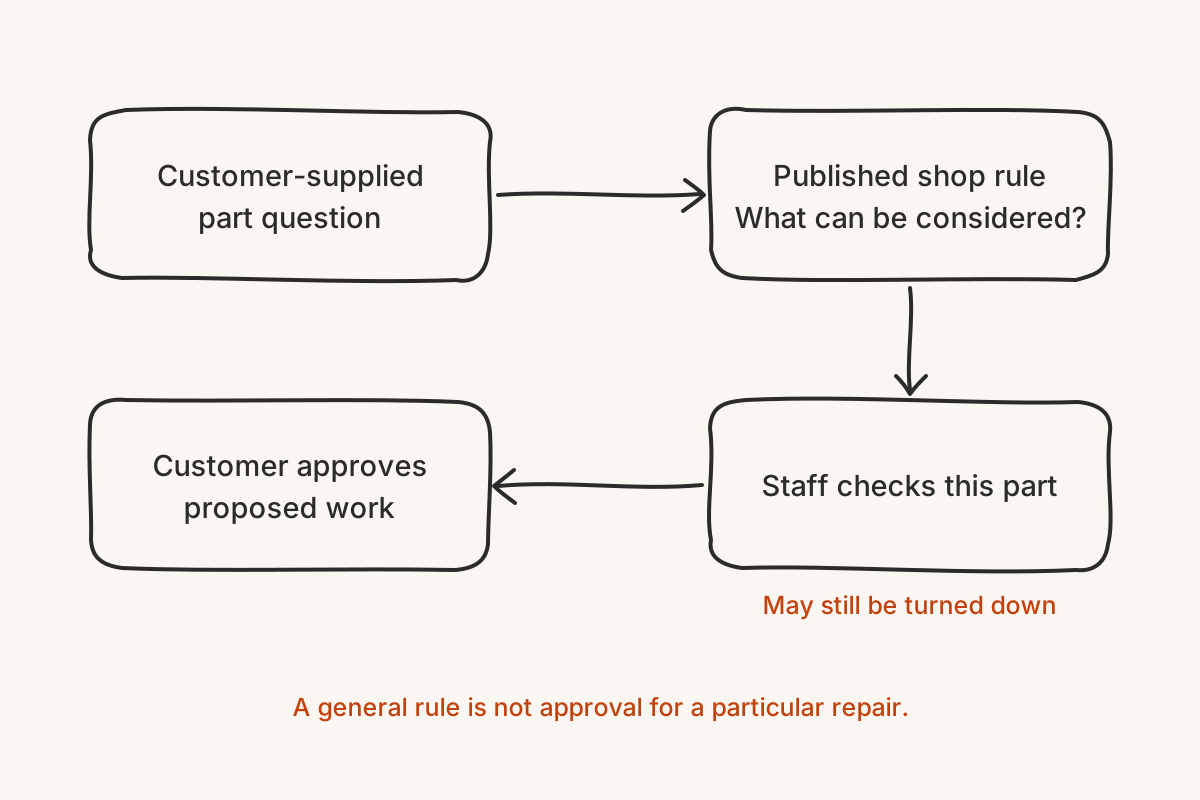
Think of the route as published shop rule → particular part checked by staff → proposed work approved by the customer. The branch at the middle is real: a component may be accepted for inspection and still be turned down for installation.
Chatterbox can repeat the business's supplied rule with its source passage. When that material does not answer an individual fitment question, it says it cannot find the answer and asks for name, phone and email. The enquiry reaches the dashboard and by email for a person. It does not examine components or make the shop's decision.
What should you test at the counter?
Hand the finished FAQ to someone who was not involved in drafting it. Ask them to answer “Can I bring my switch?” without looking at a job sheet, then “Will you install this switch?” while holding a mismatched part. The first answer should identify the shop's process. The second should require someone with the appliance in front of them. Then check whether the team can explain any fee, what happens to unused items, and the limits of its own work terms.
Remove every bracket. Compare the website wording with the counter's actual practice. A policy that makes visitors carry a fan across town for a service the bench always refuses is worse than a brief, honest refusal online.