Verify a website chatbot answer by opening the source passage shown with it, reading the surrounding rule, and checking that the page is current. If the source does not support the reply, correct or remove the source, refresh the chatbot knowledge, and test the question again.
A source turns a chatbot reply into something you can inspect. It does not make the reply correct by itself. Chatterbox shows the source passage behind each answer, so use that passage as the start of a check: open it, read beyond the highlighted words, and confirm that the business still stands behind the full rule.
This matters most for prices, policies, opening times, and service boundaries. A reply can quote a real sentence and still miss the condition in the next one.
What should you check in the source passage?
First, ask whether the passage answers the visitor's exact question. Shared words are not enough. A page about delivery may mention three days for dispatch while the visitor asked when the order will arrive. A cancellation page may describe standard bookings while the question concerns a non-refundable offer.
Read the sentences before and after the passage. Look for a deadline, location, eligibility rule, exception, or “starting from” qualification that changes the meaning. Then open the full source and check its title and context. A sentence copied from an old announcement can look current when shown alone.
Chatterbox answers from the business material it has been given and shows where each answer came from. That makes the route back to the wording visible. The business still has to decide whether that wording is complete and current.
How do you verify that the source is current?
Compare the cited source with the place your team treats as authoritative. If the chatbot cites a public pricing page, check that page against the rate currently used for quotes. If it cites an uploaded document, confirm that the file is the approved version rather than last year's copy.
Chatterbox can use a website crawl, uploaded file, pasted text, or hand-typed Q&A. Search the other source types for the same fact. A correct new page does not cancel an older answer stored in a document or manual entry. Two live versions leave the next reply dependent on which one is found.
Do not patch the chatbot by adding a second, newer sentence while leaving the stale source in place. Correct or remove the old material. One maintained answer is easier to verify than several dated copies.
What should you do when the reply is not supported?
Classify the problem before editing anything.
If the source says something different from the reply, preserve the source and test again after the chatbot knowledge is refreshed. If the source itself is wrong, correct the business content first. If two sources disagree, choose the approved version and remove the other. If no source answers the question, do not write a likely answer merely to make the test pass.
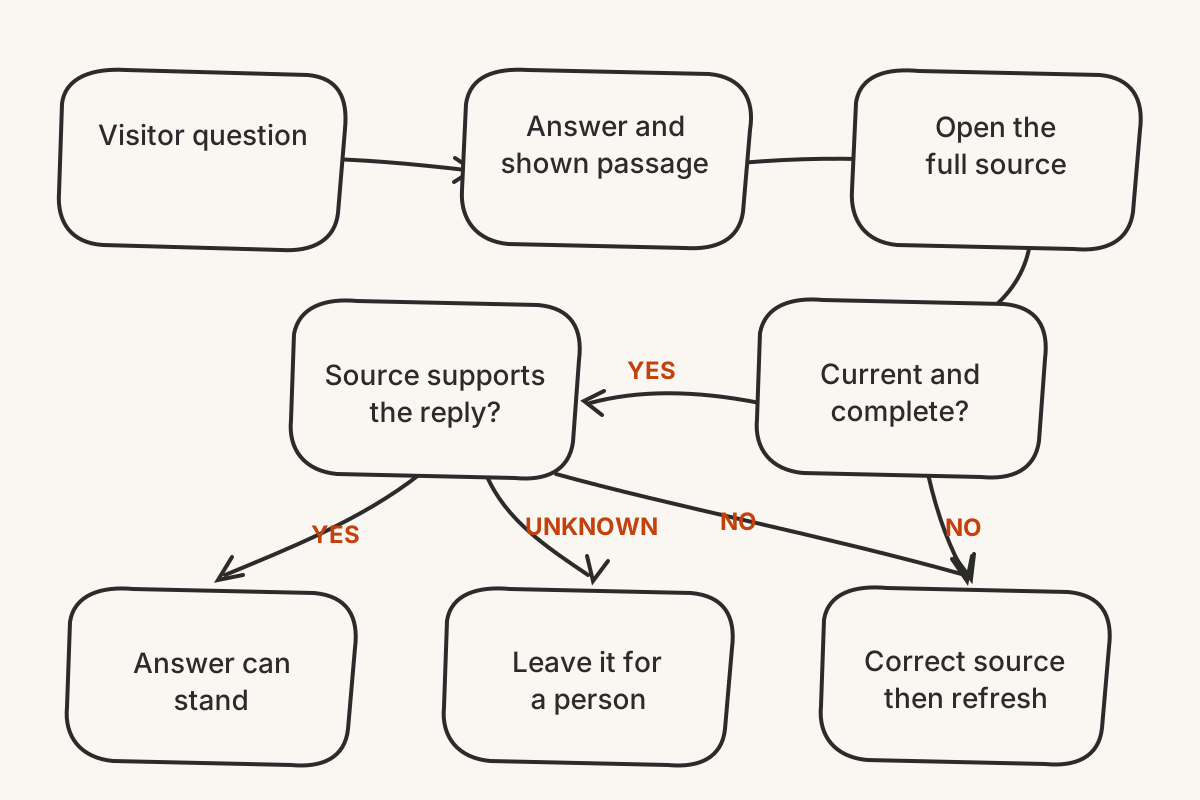
A website source can be re-crawled once a day after a change. Once the corrected material is available, refresh it and ask the original question in the visitor's words. Check the source passage again rather than accepting a familiar-looking reply.
When the material still does not settle the question, Chatterbox says it cannot find the answer and asks for contact details. That is a valid result. The purpose of verification is not to force every question into an answer. It is to separate what the business has established from what a person still needs to decide.
Which two questions should you test next?
Retest the original question first. Confirm that the answer now follows the intended source, including its conditions.
Then change one important detail. Move the cancellation past the stated deadline. Ask about a location just outside the published area. Turn a standard service into a custom request. The altered question should receive a different supported rule or reach contact capture; it should not inherit certainty from the first answer.
Keep a short note with the question, source, correction, and date checked. You do not need a large report. You need enough to show which business statement supports the reply and where that statement stops.
A source-backed answer earns trust when a person can follow the source and reach the same conclusion. If they cannot, fix the material or leave the decision to a person.