A pet grooming matted-coat FAQ should tell owners how to flag tangles before an appointment, what the groomer needs to assess in person, and when the service and charge will be confirmed. Do not promise to brush out every coat or quote a final price from a photograph. Give the owner a clear route to a human decision.
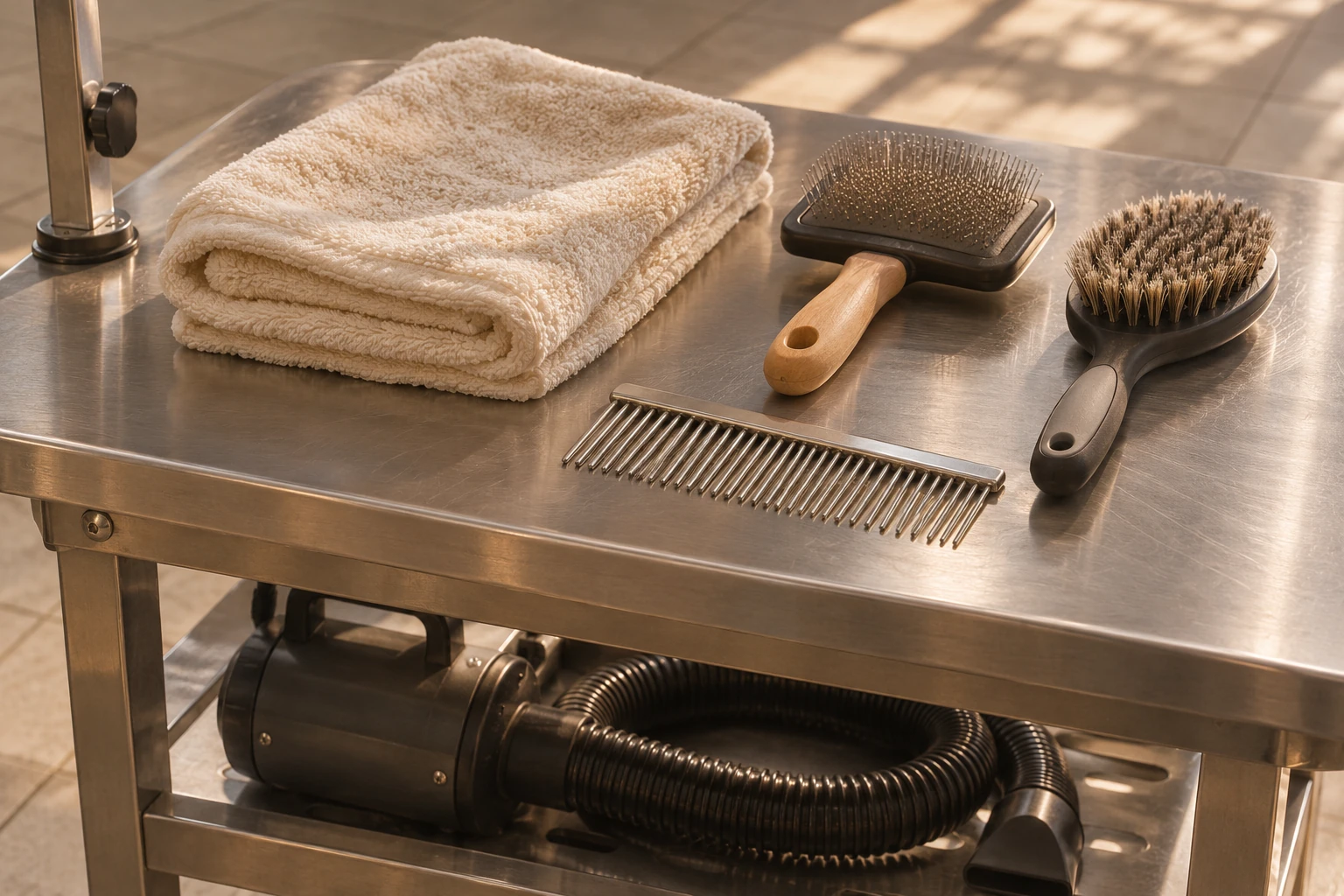
The dog is booked for a wash and trim. On the morning of the visit, its owner mentions a tight knot behind an ear. The receptionist has a routine price, but no one has examined this coat. This worksheet builds a matting FAQ around that missing conversation, without promising a result for one pet.
Should a customer report tangles when booking a groom?
Yes: invite the owner to flag them early, using the channel the shop checks. A description of where the tangles are may help staff prepare questions. If the business accepts photos, explain that they help plan an assessment, not decide the service. A picture of the dog's back may hide a problem under its collar. It cannot establish a price.
Decide whether your booking team asks about coat concerns or waits for the customer to volunteer them. If the owner mentions broken skin or another clinical concern, do not turn the FAQ into veterinary advice. Refer them to a veterinarian.
Which matted-fur questions need prepared answers?
The square brackets below are editing notes, not a policy to paste unchanged.
“My dog's coat has knots. Can I still request an appointment?” Contact [booking channel] and tell us [the information your receptionist needs]. [State whether a groomer assesses coat condition before the service is agreed.] An appointment request does not determine what treatment is possible.
“Will you brush the knots out?” [Explain who talks through the available options after seeing the animal.] We can describe our process now, but [name the point at which your team decides the plan]. Do not replace this with an automatic promise to preserve a particular coat length.
“Does matting change the cost?” [Insert the shop's approved pricing rule, if it has one.] [Say when the owner receives an estimate and how a changed service is approved.] If the business cannot quote a final charge until the visit, say exactly that. A vague surcharge notice is not a substitute for an estimate conversation.
“What if a normal groom is not possible?” [Describe who contacts the owner, how alternatives are discussed and what happens to the appointment.] Never let the website silently turn a wash-and-trim booking into permission for a different service.
If the shop handles more than one species or coat type, review the wording for each. Have the groomer approve the finished answers, especially the sentences about what can be attempted.
Where does an online grooming answer end?
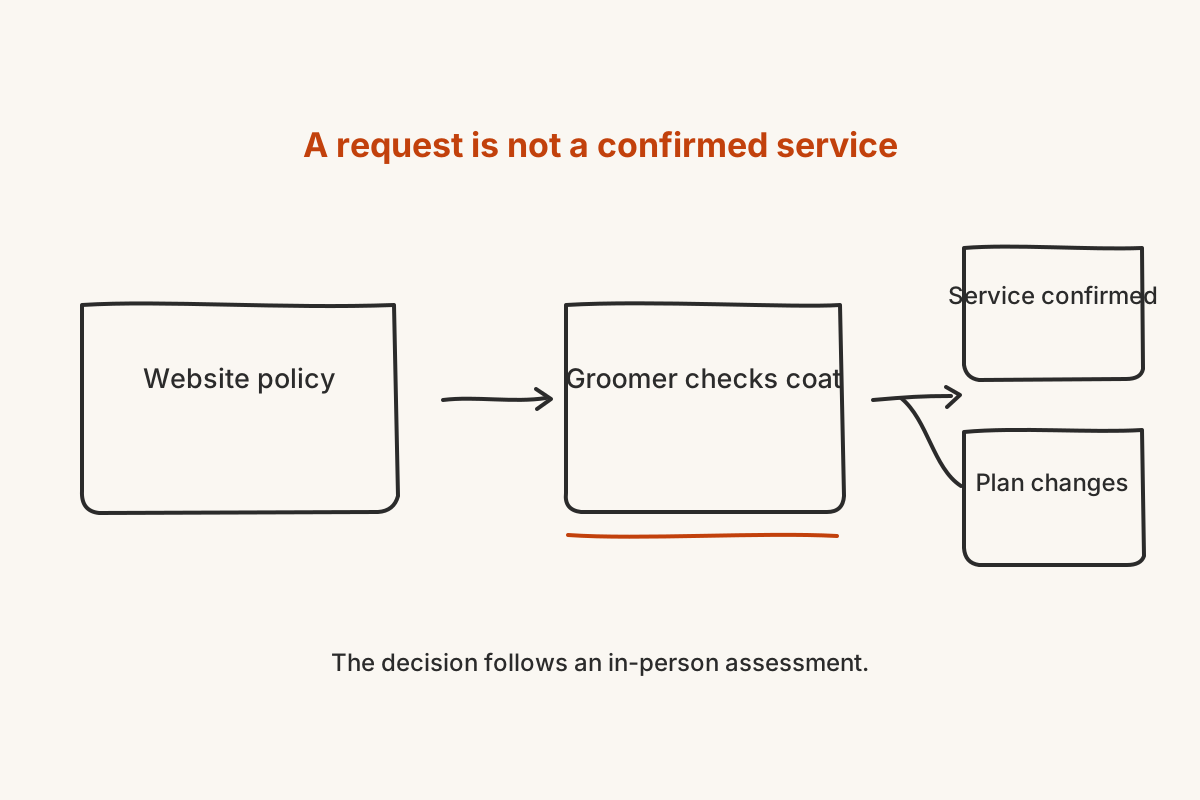
The Website policy explains how to report a concern and what happens at arrival. The Groomer checks coat before a specific method or quote is agreed. After that review, either Service confirmed or Plan changes. The diagram is a reminder that sending a message is not consent to a new plan.
Imagine an owner types, “Can you get these mats out without clipping?” The result belongs to the groomer. Chatterbox uses the business's own crawled pages, uploaded files, pasted text, and hand-typed Q&A. It shows the source passage with an answer. When its material does not settle the question, it says it cannot find the answer and asks for name, phone, and email; those leads arrive in the dashboard and by email. That captures a callback request, not permission to work on the animal.
Which questions should the team try before publishing?
Ask the widget two deliberately different things: “How do I report a tangled coat before my appointment?” and “How much will my dog's grooming cost now that its fur is matted?” The first can point to a published contact route. The second needs a decision from someone who can inspect the dog, unless your business has an explicit, applicable pricing rule. Check the visible source passage as well as the reply; a confident sentence sourced from an outdated rate card is still a problem.
Role-play the counter conversation. Can the team say when it offers an estimate and how it gets the owner's agreement? Fill the brackets from those decisions. If the policy changes, update the business's source and re-crawl the website source; a source can be re-crawled once a day. The useful outcome is an owner who knows whom to ask, not an answer that guesses at the dog's coat.