Chatterbox can answer shipping and delivery questions from terms your business has published. It can surface stated areas, charges, dispatch times, and delivery estimates. When the material does not settle a particular address, delay, or order, it asks for contact details instead of inventing a delivery promise.

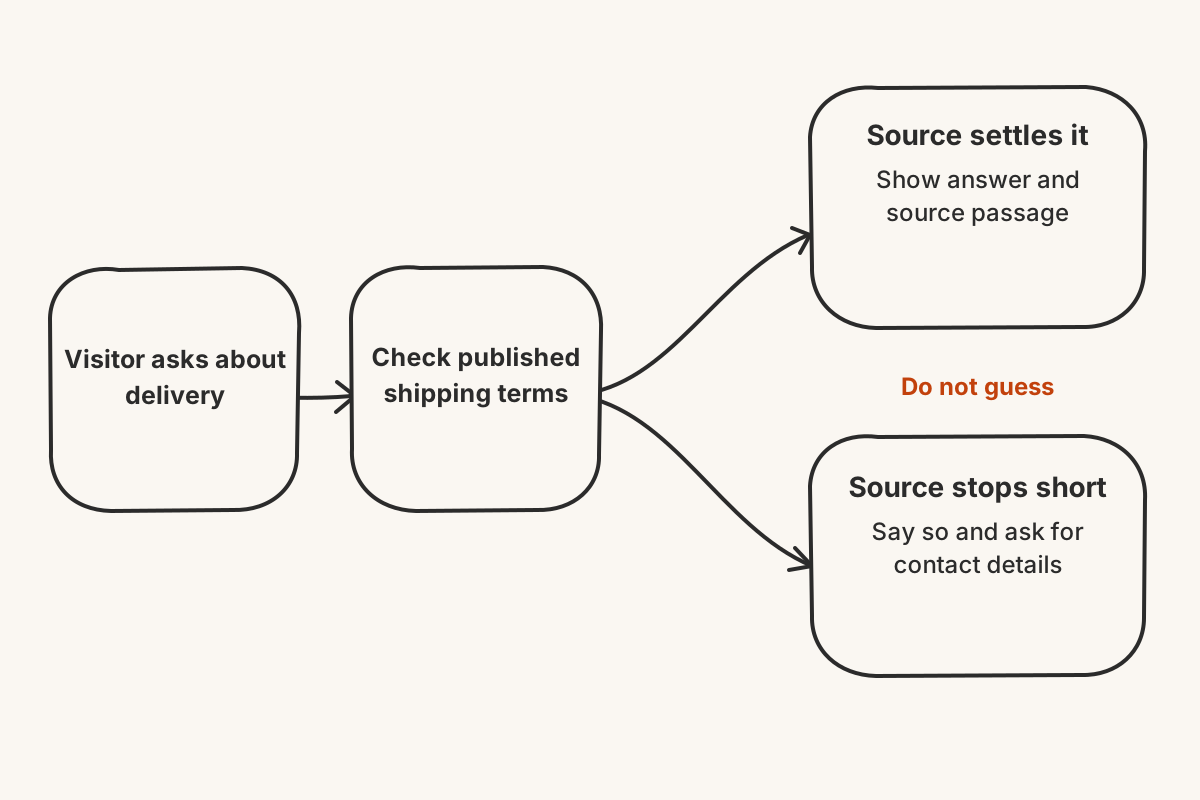
A customer wants to know whether you deliver to their postcode, what shipping costs, or how many days an order normally takes. Chatterbox can answer from delivery terms your business has published and show the source passage behind the reply. If those terms do not cover the question, it admits the gap and collects contact details for a person.
Which shipping details should your website publish?
Separate the facts that customers often see blurred into one promise.
State where you deliver. Use postcodes, cities, regions, or another boundary your team can apply consistently. If some areas have different rules, attach the condition to the place rather than adding “charges may vary” at the bottom.
State what delivery costs and when the charge changes. A free-shipping threshold, a local delivery fee, and a charge for remote areas are three different rules. Make the scope of each one clear.
State the stages of time separately. Dispatch time is how long the business takes to send an order. Delivery time is what follows. A sentence promising “delivery in three days” becomes misleading if it really means the parcel leaves within three days.
Include any cutoff, working-day rule, or condition that changes the ordinary estimate. Keep these details in one maintained source. Chatterbox can use a site crawl, file upload, pasted text, or hand-typed Q&A, but four copies of the same shipping rule create four places for an old fee or time to survive.
Can a website chatbot answer when an order will arrive?
It can repeat a published estimate when the question fits that estimate. If the delivery page says orders to a named area usually arrive within a stated window, Chatterbox can surface that wording and show where it came from.
That answer should remain an estimate if the source calls it one. The widget should not turn “usually dispatched within two working days” into a guaranteed arrival date. It should also keep dispatch and delivery separate when the website does.
A visitor asking about one particular order may be asking for facts that are not in the published material. If the source does not establish what happened to that order, Chatterbox says it cannot find the answer and asks for the visitor's name, phone, and email. The lead reaches the dashboard and by email so a person can check the case.
Which delivery questions should reach a person?
Use a person when one missing detail could change the promise. The address may sit just beyond a published boundary. A bulky item may need a different charge. A holiday may affect the ordinary dispatch window. A customer may report that an estimated date has already passed.
A general delivery page cannot decide those cases unless the business has written a rule that clearly covers them. Chatterbox would rather leave the gap visible than borrow certainty from a nearby statement.
That order matters. “This should arrive tomorrow” followed by a contact form has already created an expectation. An honest refusal followed by contact capture preserves the question without making the team correct its own website on the callback.
How do you test and maintain delivery answers?
Test one known rule and one unsupported case. Ask about a place, charge, or time stated clearly on the delivery page. Check the reply and the displayed source passage together. Then change one condition: use an unlisted postcode, an unusual item, or a date the page does not cover. The second question should reach contact capture instead of inheriting the ordinary rule.
When a fee, area, cutoff, or estimate changes, update the primary source and remove stale copies. Chatterbox allows a website source to be re-crawled once a day. Refresh it only after the corrected words are visible at the public URL, then repeat both questions.
A useful delivery answer is narrow enough to honor. Publish the ordinary rule in full. Let the widget surface it outside business hours. Leave the delayed parcel, boundary address, and unlisted exception with a person who can check what happened.