Chatterbox can answer location and directions questions from details your business has published, including an address, entrance, landmark, or parking instruction. If that material does not settle a temporary route change or an unusual access question, it asks for contact details instead of inventing directions.

A customer can have the correct street address and still be unable to find the door. The shop may sit behind another building, use an entrance on a side lane, or share a complex with several units. Chatterbox can surface the arrival details a business has written down. It should stop when the visitor asks about a route or condition the published information does not cover.
What location details should a business website publish?
Start with the complete address in the form someone can paste into a map. Include the unit, floor, building, street, locality, city, postcode, and any detail needed to distinguish one branch from another. A shortened address that works for regular customers may leave a first-time visitor at the wrong gate.
Add one stable landmark when it genuinely helps. Describe the place in relation to a junction, public building, or other feature that is unlikely to move. Avoid directions based on a temporary stall, an old shop name, or a hoarding that may disappear next week.
Then describe the final approach. Say which gate, staircase, lift, reception desk, or side entrance a visitor should use. If parking is available, state where it is and which vehicle types or hours the instruction covers. If it is not available, do not let a vague “parking nearby” become a promise.
Keep accessibility information separate and exact. State a step-free route, lift, or doorway only when the business has checked it. “Ground floor” does not automatically mean step-free, and a lift in the building may not reach every entrance.
Can Chatterbox answer how to find your shop?
Yes, when the business's supplied material gives the answer. Chatterbox can use a website crawl, uploaded file, pasted text, or hand-typed question-and-answer pairs. If the contact page identifies the side-lane entrance or the approved directions note explains where to park, the widget can return that information.
Each answer shows the source passage it came from. The visitor can check the wording, and the team can trace an incorrect instruction back to the page or note that supplied it. That matters when two pages show different addresses after a branch has moved.
Give each branch its own complete block. Put the branch name, address, landmark, arrival instruction, hours, and contact route together. Do not publish a landmark on one page and expect a visitor to infer which of three addresses it belongs to.
Which directions questions should go to a person?
A fixed address does not settle every journey. Roadworks may close the usual lane. A building may temporarily move its reception. A visitor may ask whether a tall vehicle fits the parking entrance, whether a wheelchair route is usable during repairs, or where to arrive for an appointment outside ordinary hours.
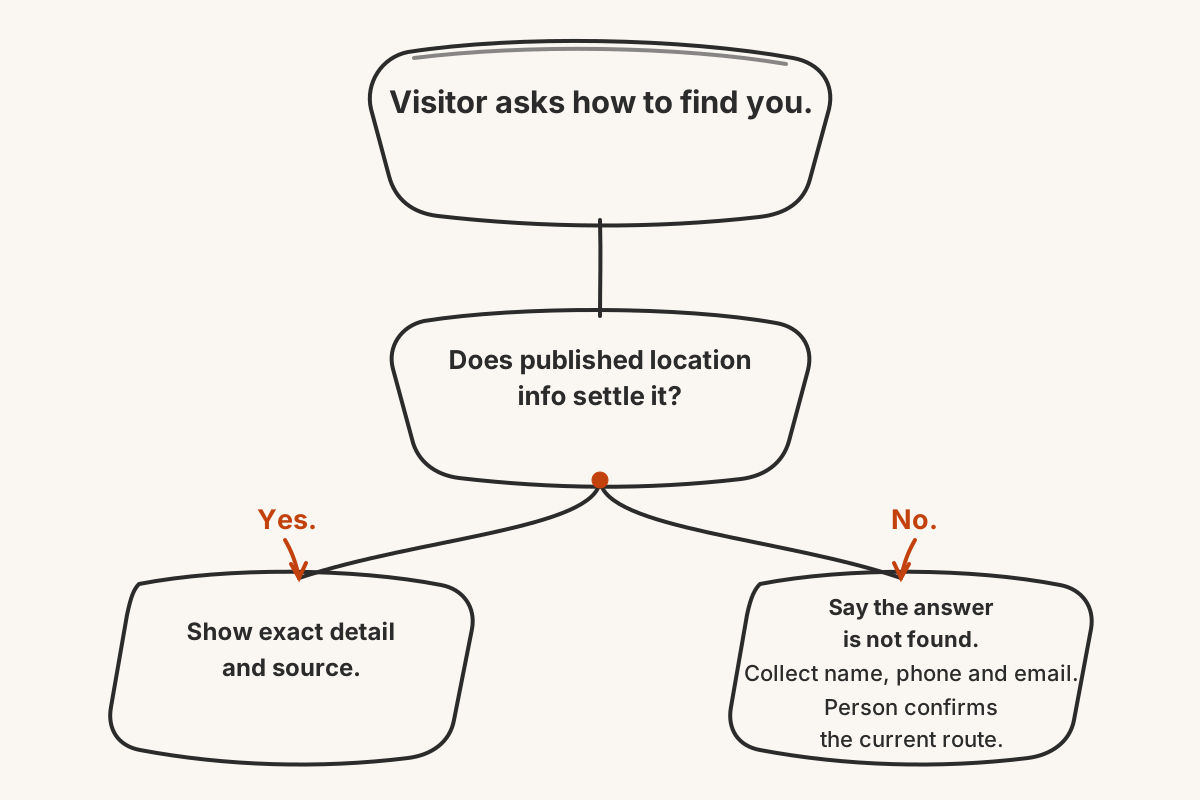
If the supplied material does not answer that case, Chatterbox says it cannot find the answer and asks for the visitor's name, phone, and email. The lead reaches the dashboard and by email so a person can confirm the current route. The widget captures the question; it does not call the visitor or guess which entrance is open today.
The decision path is: Visitor asks how to find you. Does published location info settle it? Yes. Show exact detail and source. No. Say the answer is not found. Collect name, phone and email. Person confirms the current route.
A likely direction is still risky. Sending someone to a closed gate wastes their trip. Describing an unverified route as accessible can create a more serious problem. The safe answer is the stable instruction the business has approved, or a visible gap for a person to resolve.
How do you test an address or directions answer?
Ask one question about each published detail: the address, landmark, entrance, floor, parking instruction, and step-free route if you state one. Check the reply and its displayed source passage together. Confirm that every condition stays attached to the instruction it changes.
Then ask about a temporary or unusual condition absent from the source. Mention a road closure, a vehicle size, or access during building work. The response should move to contact capture instead of extending the ordinary route.
When the business moves or an entrance changes, correct the primary page and remove stale copies. Chatterbox allows a website source to be re-crawled once a day. Refresh it after the new details are visible at the public URL, then repeat the ordinary and edge-case questions.
Useful directions do not try to predict every journey. They get a first-time visitor to the right entrance under normal conditions and leave today's exception with someone who can check it.