Product care instructions should identify the exact item or material, explain routine cleaning, name what to avoid, and separate ordinary care from damage that needs inspection. Publish one approved version. Chatterbox can answer from those instructions and collect contact details when a customer's case is not covered.

Product care instructions should help a customer handle an ordinary cleaning or maintenance question without guessing which advice applies. The template below keeps the item, routine, warning, and exception together. Replace every bracketed prompt with wording your business has approved. Delete any section that does not apply.
Which product does this care advice cover?
Start by naming the product and the material. “Wipe gently” is not useful if one version is solid wood and another has a laminate surface. The customer should be able to match the item in front of them to the instructions without identifying it from memory.
Use this opening block:
These instructions cover: [product name, material, finish, or model family].
They do not cover: [similar item or finish that needs different care].
If you are unsure which version you have, contact the team before using a cleaner or tool.
Use the same name shown on the product page, invoice, or packaging. If a finish changed between product batches, include the visible detail that separates the versions. Do not tell a customer to find an internal stock code they have never seen.
What should the routine care instructions say?
Give the customer a short sequence they can follow. Keep frequency, tools, and method in separate lines.
Routine cleaning: Remove [dust or loose material] with [approved tool]. Clean with [approved method]. Dry or finish by [final step].
Regular maintenance: Every [approved interval or event], [maintenance step].
Before first use: [preparation step, or delete this line].
Storage: Keep the item [approved position or conditions].
Prefer actions someone can observe. “Maintain carefully” does not tell them what to do. “Use a dry, soft cloth before applying the approved cleaner” gives an order and a tool. If a step depends on the material, repeat the material name in that line rather than expecting the customer to carry a condition from an earlier paragraph.
Put the approved guide in one place your team will maintain. Chatterbox can use knowledge from a site crawl, file upload, pasted text, or hand-typed Q&A. A care page and an older uploaded leaflet can leave two different methods active at once.
Which warnings and damage cases need a person?
Name only the warnings the business can stand behind. Use this structure:
Do not use: [specific cleaner, tool, temperature, or method].
Stop and contact us if: [visible change, damage, loose part, or condition that needs inspection].
Before requesting help, keep ready: [product identifier, purchase detail, or photographs the team genuinely needs].
Routine care and damage assessment are different jobs. A published guide may explain how to dust a wooden surface. It may not settle whether a new crack is cosmetic, repairable, or covered by warranty. Do not turn a general warning into a diagnosis.
Chatterbox answers from the business material it has been given and shows the source passage behind the answer. When that material does not settle the customer's item or damage, Chatterbox says it cannot find the answer and asks for a name, phone number, and email. The lead reaches the dashboard and by email for a person to review.
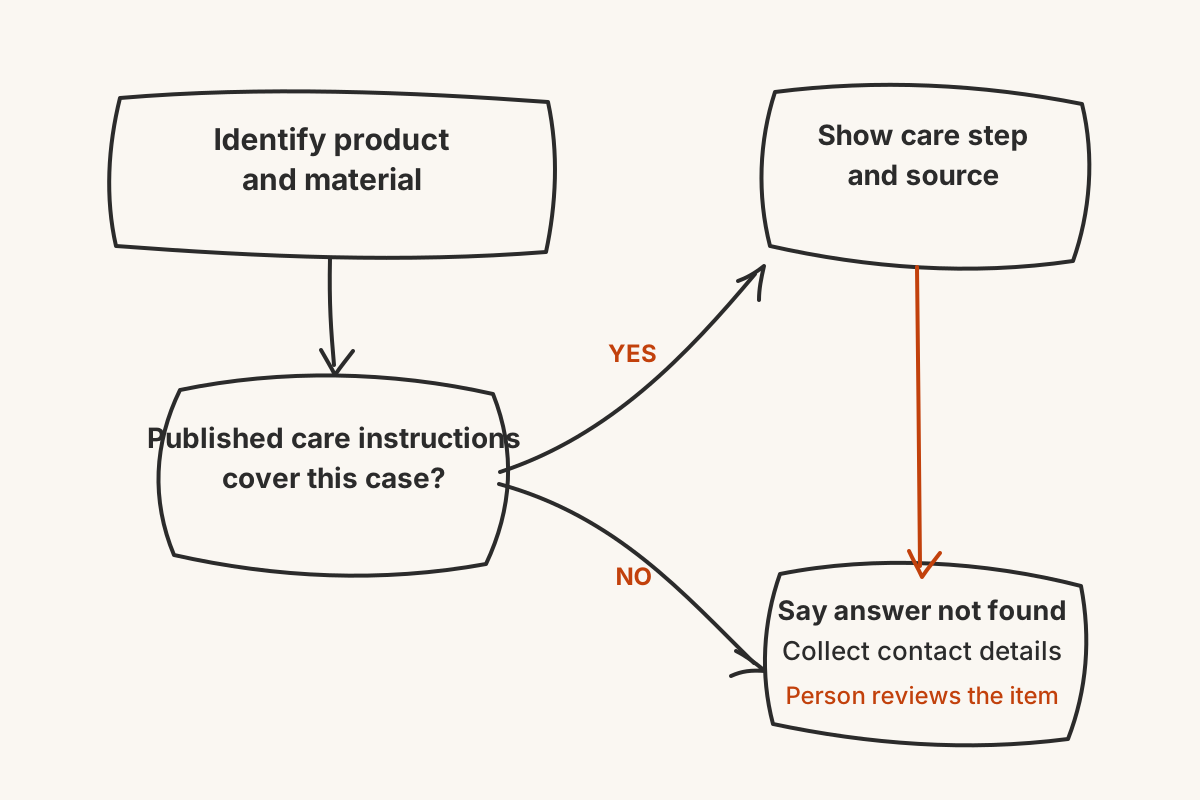
The boundary in the figure is simple: Identify product and material. Published care instructions cover this case? Yes: show the care step and source. No: say the answer is not found. Collect name, phone and email. Person reviews the item.
How do you test the care guide before publishing it?
Ask someone who did not write the guide to identify the covered item, carry out the routine sequence in words, and point to the first condition that requires contact. If they have to choose between two cleaners or infer whether a warning applies, revise the source.
Then test the chatbot with one ordinary care question and one damage question the guide does not decide. Check that the ordinary answer keeps the material and method together and displays the intended source passage. The uncovered case should reach contact capture rather than borrow advice from a similar product.
When a product, finish, or approved method changes, correct the primary source and remove stale copies. A website source can be re-crawled once a day. Refresh it after the new instructions are publicly visible, then repeat both tests.
A useful care guide makes routine maintenance easy and the edge of its advice obvious. It should help a customer protect the product without pretending that a page can inspect the item in front of them.