A pet boarding medication handover checklist should separate the business's general acceptance policy from instructions for one animal. Publish what owners must bring and how to request a review, then have a person confirm the individual instructions before accepting the stay. A website chatbot can explain the published policy; it cannot approve a medication plan.

A pet boarding medication handover checklist has two jobs: tell an owner how to ask about medication before booking, and give staff a record to complete for that animal. Neither a generic website policy nor a chat answer can confirm that a particular stay is suitable. Use this template to keep the public instructions separate from the private handover. Replace every bracket with a decision your team has checked; do not publish an unfilled example as a promise to administer medicine.
What should the general policy tell an owner?
Write a General policy about the questions you will consider, not a blanket “we give all medicines” claim. State whether your business considers medication requests at all, how far before arrival an owner should contact the team, and which person decides whether the request can be accepted. If you have limits on the kind of care your staff can provide, describe only limits the business has actually agreed to follow. Do not copy another boarding service's rules.
A short public starting point could read: “If your pet needs medication during a stay, contact [team contact route] before [your booking or arrival cutoff]. Tell us that medication is involved so [responsible staff member] can review the requirements. A request is not accepted until we confirm it with you.” The bracketed cutoff and review route need to be real. If your business cannot provide this service, say so explicitly instead of inviting requests you cannot fulfill.
Which details belong in an individual handover?
Use Individual instructions on a private intake record, not as a public chat script. Have the owner and the staff member responsible for the stay check the animal's identity, the medication as supplied, the written instructions from the appropriate professional where needed, the schedule the owner reports, storage requirements, who to contact if a dose is missed or the animal refuses it, and what the business can actually do in that situation. This list is a set of questions to settle, not directions for administering a drug.
Animal and stay: [pet identity, stay dates, owner contact route].
Medication supplied: [owner's description and what staff received; check against the actual item].
Instructions and timing: [instructions reviewed with the responsible staff member; record the source and any questions still open].
Storage and exceptions: [confirmed handling arrangements, what to do if the plan cannot be followed, and who makes that decision].
Agreement: [who reviewed the instructions with the owner, when, and how the owner receives the confirmed handover].
Keep individual details in a private intake record, not an open website chat.
Who decides whether the stay can go ahead?
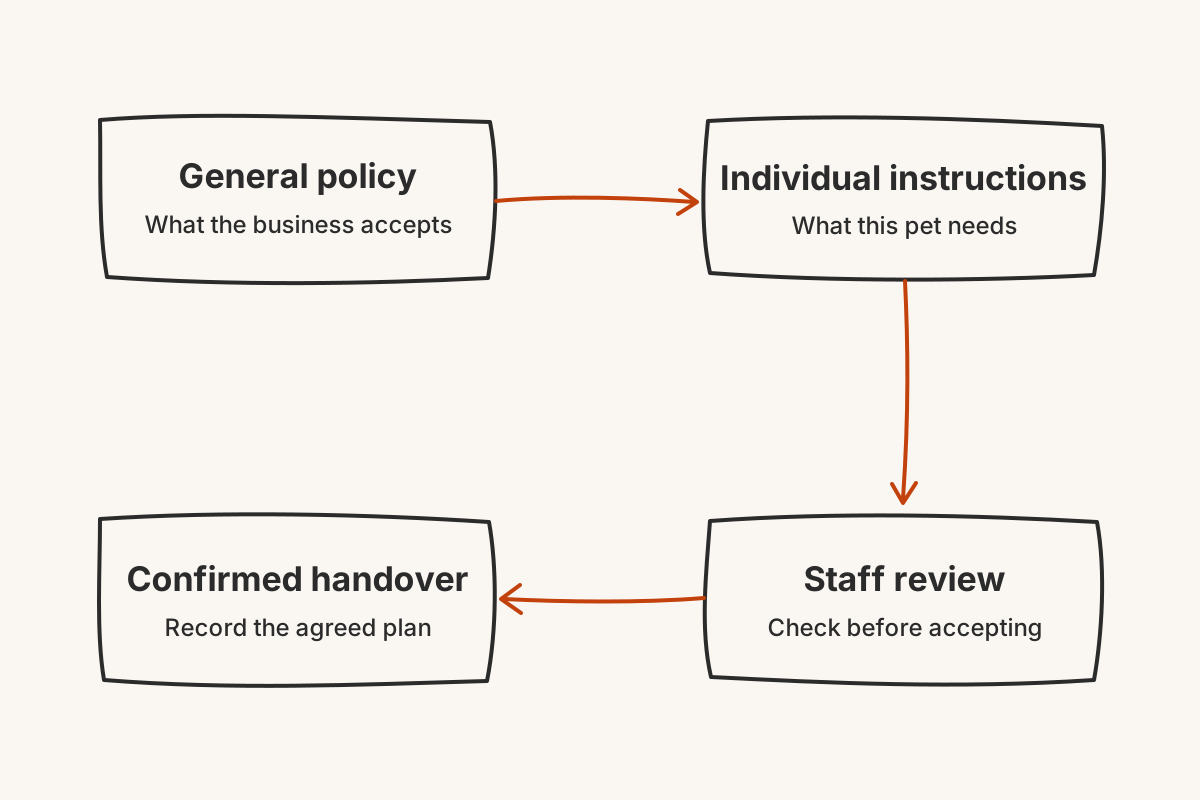
The sequence is General policy → Individual instructions → Staff review → Confirmed handover. At the Staff review, compare the owner's request with the business's actual capacity and settle unanswered questions with a person. The Confirmed handover is the record of what was agreed, not a result inferred from a website answer. If the team cannot meet the request or a necessary instruction remains unclear, do not confirm the medication arrangement. Refer the owner to an appropriate professional for clinical questions rather than improvising an answer.
Chatterbox can answer from the boarding business's published pages, uploaded files, pasted text, or typed Q&A, and shows the source passage. When its material does not answer, it says it cannot find the answer and asks for contact details; name, phone and email reach the dashboard and by email for a person to follow up. That is not a booking confirmation, a medication intake record, or clinical advice.
How should you test the website wording?
Ask the site, “How do I tell you my dog needs medicine during a stay?” The reply should point to the actual public contact route if you published it. Then ask, “Will you give my dog a particular medicine at eight tomorrow?” The general policy cannot decide that individual case. Have a staff member compare both answers with their source passages and the team's real process before relying on the wording.
When the policy changes, update the source rather than leaving an older FAQ to compete with the new rule. A website source can be re-crawled once a day. A careful human decision matters more than a quick yes.