A missed-class makeup policy FAQ should tell families how to report an absence, whether a replacement lesson is offered, which deadline or class type changes that rule, and who confirms an individual request. Publish only your center's approved terms. Chatterbox can surface those terms and request contact details when the supplied material does not settle the case.

A child misses Wednesday's math lesson. Their parent sees another group on Thursday and asks whether the child may join it. There are two decisions here: does the absence qualify for a replacement, and is there a place in that particular group? The first can be a published rule. The second may need someone to open the timetable.
Use this FAQ template to write your center's own answers. It supplies questions and blank spaces, not a ready-made entitlement.
Which absence counts under your makeup policy?
List the lesson formats your center sells. A group batch, individual tutoring session, and online lesson may follow different arrangements. Write a separate rule for each rather than announcing that all missed lessons can be made up. Define what counts as notice: a message before class, a call to reception, or another channel your staff actually monitor.
State whether the reason matters. Some centers may treat illness differently from a family trip; others may not. Do not invite families to submit medical details through a public chat just because the policy needs an absence category. Tell them where to discuss evidence privately if your center requires it.
Finally, separate student absence from center cancellation. A teacher who cannot attend is not the same situation as a student who missed a running group. Put the two outcomes under different questions so a parent does not have to infer whether the same deadline applies.
What should the missed-class FAQ actually say?
Fill in only the choices your staff can honor, then remove all square brackets. If a choice is still disputed internally, do not publish that line yet.
Who should I notify if my child cannot attend? Tell [team or role] through [monitored channel] by [deadline measured from the scheduled lesson]. Give [minimum information needed to identify the lesson].
Can the lesson be replaced? A missed [named class type] [does / does not] qualify for [your actual replacement arrangement] when [specific condition]. For other class types, [the separate approved rule].
How long do I have to request it? Send a request by [calendar point or interval with a clear starting event]. [State whether unused replacements expire or carry forward, if applicable].
Can my child attend a different group? [Explain how you check the student's level and a place in the group.] Please wait for [your center's confirmation method] before attending.
What if the center cancels the lesson? [State the separate remedy and how families hear about the arrangement].
Read the lines aloud with a real timetable in front of you. “Within a week” needs a starting day. “Depending on availability” needs someone assigned to confirm availability. “Another class” needs to say whether it is the same subject and level. If these pieces are missing, a friendly sentence can send a child to a room where no seat was arranged.
How should reception handle a replacement request?
Give reception a small decision record: the original lesson date, the notice time, the applicable class format, and the requested replacement. These facts let staff apply the absence rule consistently. A parent who calls on Friday about Wednesday's lesson should hear which clock started on Wednesday and which action was required before it ran out.
Consider three separate outcomes. Outside the notice window: tell the family the stated outcome, including any exception review your policy actually permits. Within the window, no matching group available: explain the next step without inventing a replacement date. Matching group available: have the responsible staff member confirm the arrangement through your normal channel before the student arrives. Passing the notice requirement alone does not reserve a chair.
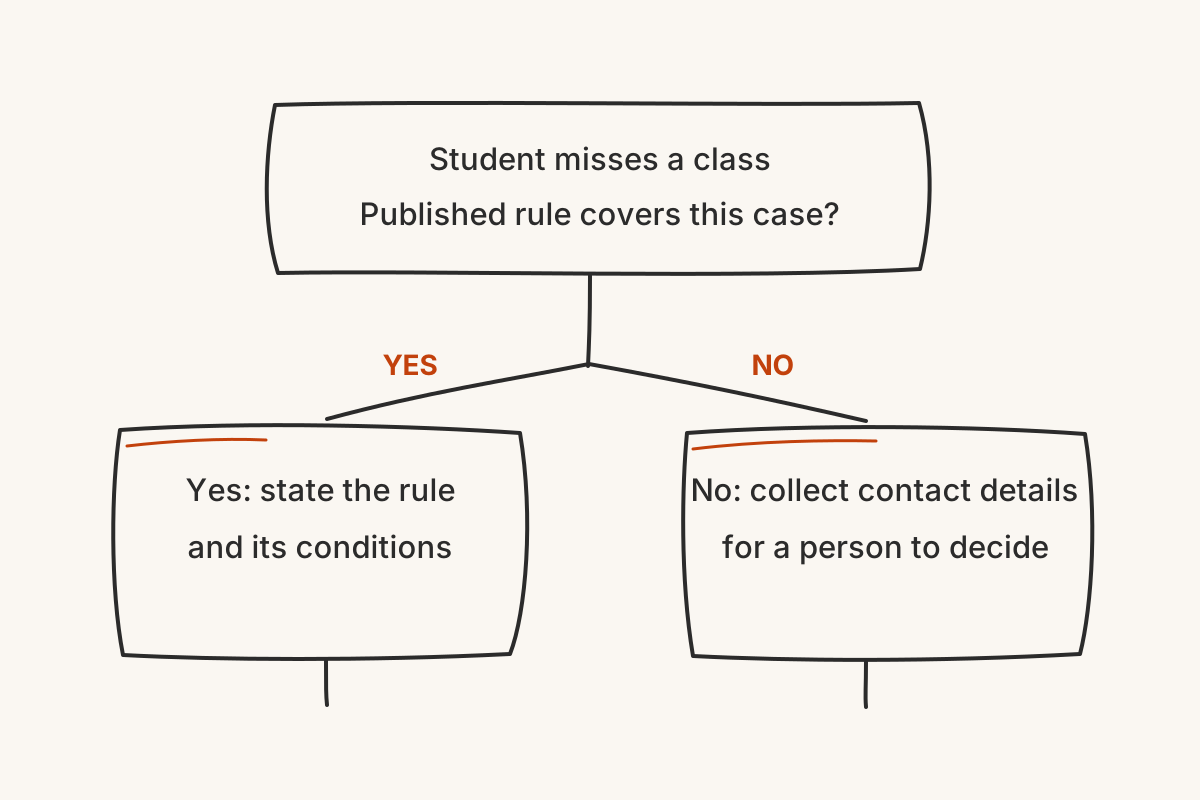
Chatterbox can explain an absence rule and display the passage supporting it. An unresolved request prompts collection of name, phone and email, delivered to the dashboard and by email. Reception still arranges the replacement; the widget cannot check tomorrow's timetable or authorize attendance in another batch.
Which examples expose gaps in the absence terms?
Build a short rehearsal around dates instead of broad questions. Suppose the rule requires notice before Wednesday's 5pm session. Read it against a Tuesday message, a Wednesday 4:55pm message, and a Thursday morning message. The terms should make each result understandable without a staff member silently inventing a cutoff.
Next, change the cause. Compare a student missing the lesson with a teacher cancelling it. If those cases have different remedies, neither answer should borrow the other's expiry period. A canceled session should not consume a student's replacement allowance unless that is genuinely the center's approved arrangement.
Finally, ask what happens when a replacement itself is missed. Does the allowance remain, expire, or require review? Add the center's actual answer if this situation occurs often. Keep replacement limits, expiry dates and carry-forward rules beside the original absence terms so families can understand the whole arrangement before requesting another lesson.
Run those dated examples through Chatterbox and inspect the quoted source. Refresh the source after changing the terms; each source can be re-crawled once a day. Remove superseded handbook wording so an old allowance does not compete with the current rule. Reception should finish with a policy it can apply to a real missed Wednesday lesson, rather than a general promise to find another class.